
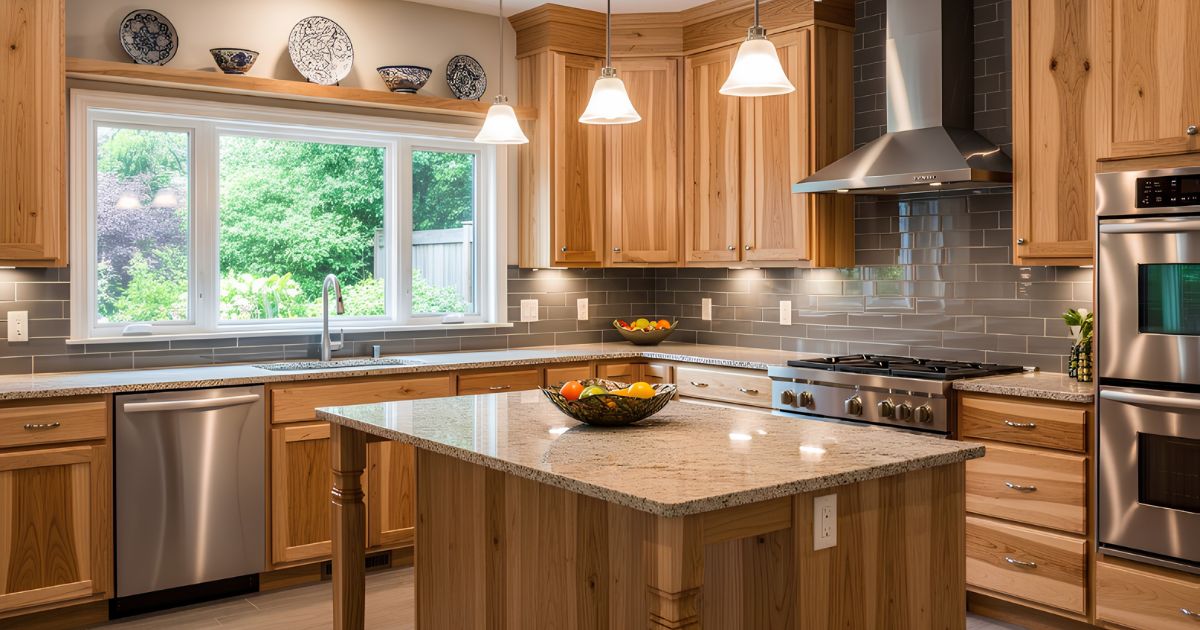

Hickory Kitchen Cabinets Design Tips help you build a kitchen that looks great and lasts for years. Hickory wood is strong and beautiful. It has bold grain patterns and rich natural colors. No two hickory cabinets look exactly the same. That makes every kitchen feel truly unique.
Following the right Hickory Kitchen Cabinets Design Tips makes a big difference. You need to pick the right colors, countertops, and hardware. Good choices bring out the best in hickory wood. Bad choices can make the space feel heavy or cluttered. These Hickory Kitchen Cabinets Design Tips cover everything you need. From style ideas to maintenance advice, this guide keeps it simple. Hickory cabinets are tough, warm, and timeless. Use these tips to design a kitchen you will love every single day.
Related Post: Top 20 Best Kitchen Cabinet Brands in 2026
Benefits of Choosing Hickory Wood Kitchen Cabinets
Hickory is a dense North American hardwood with a Janka hardness rating of approximately 1,820 lbf significantly tougher than red oak (1,290 lbf) or hard maple (1,450 lbf). That physical strength translates directly into practical benefits for a high-traffic space like the kitchen.
Here’s why homeowners and designers keep coming back to hickory:
- Exceptional durability: Hickory resists dents, scratches, and daily wear far better than softer wood species. It’s an ideal choice for busy family kitchens.
- Distinctive grain and color variation: The interplay of creamy sapwood and reddish-brown heartwood creates natural contrast no two cabinets replicate exactly. Knots, burls, and wavy grain lines are features, not flaws.
- Long service life: With proper care, hickory cabinets can last 20 years or more without significant deterioration.
- Versatile style range: Hickory suits rustic, farmhouse, transitional, and even modern organic kitchen designs.
- Strong resale appeal: Custom hickory cabinetry adds perceived value and stands out to buyers during home sales.
One honest note: hickory’s color variation is its superpower, but it’s also something to think through. If you prefer perfectly uniform cabinetry, a painted maple might suit you better. If you love character and texture, hickory is hard to beat.
Popular Hickory Kitchen Cabinet Styles
Modern Hickory Kitchen Cabinets
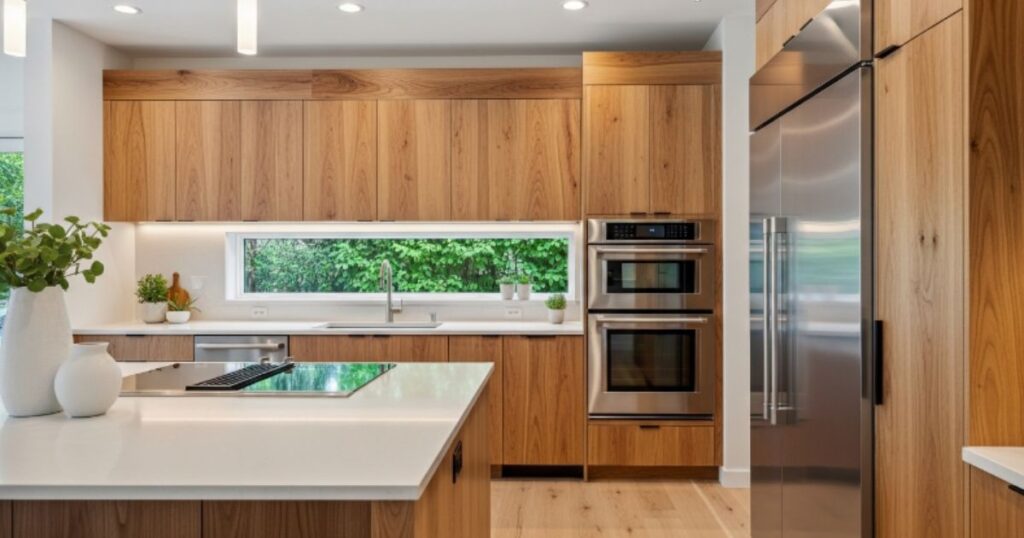
Modern hickory kitchens work by letting the wood’s natural texture do the heavy lifting while keeping everything else simple. Think slab-front cabinet doors, minimal hardware, and a clear or light natural finish that showcases the grain without competing with it. Pair with stainless steel appliances and a sleek quartz countertop for a clean, contemporary result that still feels warm.
Natural Hickory Kitchen Cabinets
Natural-finish hickory celebrates the full color spectrum of the wood creamy whites, warm tans, and deep reddish-brown streaks all living side by side. No stain is added beyond a protective clear coat. The result is organic and authentic, with every cabinet face looking slightly different. This style works beautifully in transitional and Scandinavian-influenced kitchen designs.
Rustic Hickory Kitchen Cabinets
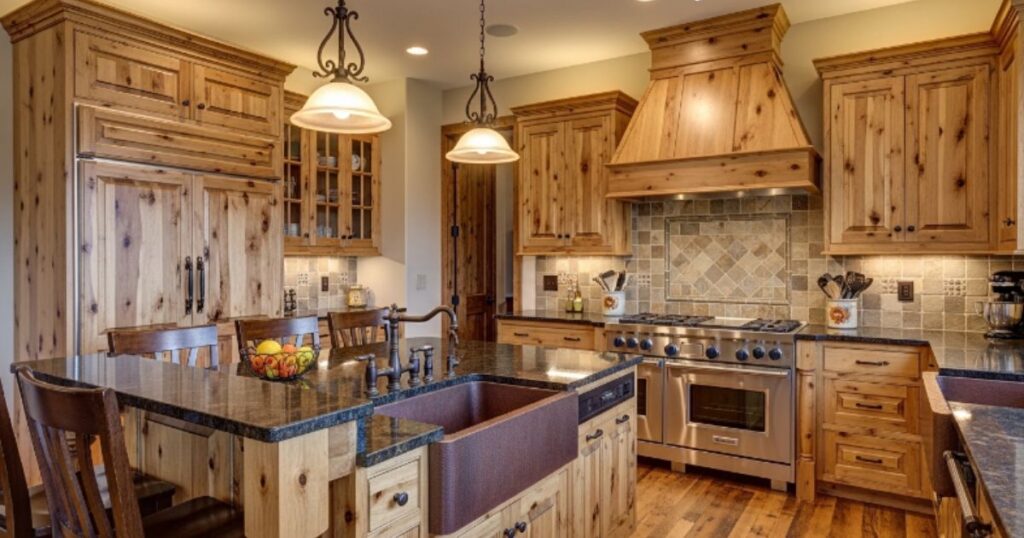
Knotty hickory is the go-to for rustic kitchens. The knots, pitch pockets, and character marks that other wood species hide become design features here. Pair with a farmhouse sink, distressed or aged-bronze hardware, stone-look tile backsplash, and warm pendant lighting for a kitchen that feels like it belongs in a countryside cottage or mountain lodge.
Farmhouse Hickory Kitchen Cabinets
Farmhouse-style hickory cabinets typically feature shaker-style doors with a light or medium stain. Add open shelving on the upper section, matte black pulls and knobs, and a beadboard panel or two for that classic down-to-earth farmhouse feel. A large apron-front sink and butcher block island top complete the picture.
The Best Color Schemes for Kitchens with Hickory Cabinets
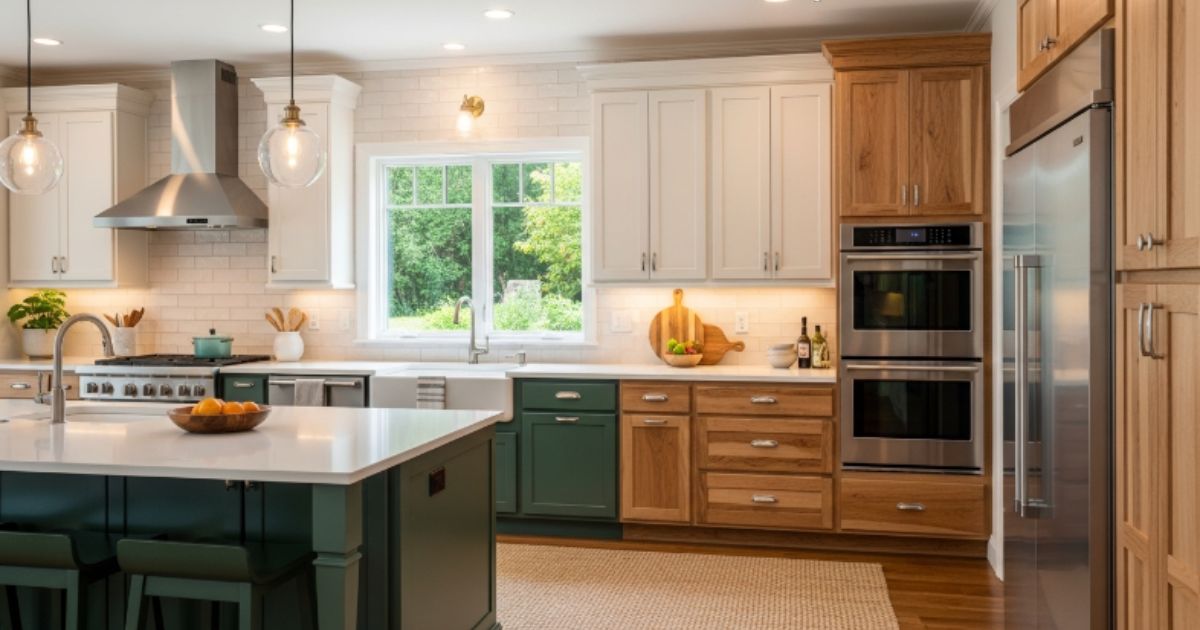
Hickory’s warm, varied tones need thoughtful wall and accent colors to avoid making the kitchen feel visually heavy. The key is contrast and balance not competition.
Color schemes that work well:
| Color Palette | Why It Works |
| Warm neutrals (cream, taupe, beige) | Complement hickory’s warmth without clashing |
| Soft greens (sage, olive) | Add an earthy, organic quality that enhances rustic tones |
| Muted blues (slate, dusty navy) | Provide cool contrast that makes hickory’s golden tones pop |
| Light gray and greige | Calm the bold grain; ideal for transitional or contemporary kitchens |
| Off-white and antique white | Brighten the space and soften the visual weight of the wood |
Colors to avoid: Strong oranges, saturated yellows, or overly warm reds. These fight with hickory’s natural variation and can make the kitchen feel dated or visually chaotic.
A practical tip: sample wall colors in your actual kitchen at different times of day before committing. Hickory’s tones shift noticeably under natural morning light versus warm evening lighting.
What Countertops Go With Hickory Cabinets?
Countertop selection is one of the most important decisions you’ll make with hickory cabinetry. The general rule: choose countertops that contrast rather than compete.
Hickory Kitchen Cabinets with Black Countertops
Black granite or matte black quartz creates a bold, sophisticated contrast against hickory’s warm tones. It grounds the kitchen visually and adds a modern edge especially effective when combined with brushed nickel or matte black hardware. This pairing works well in both rustic-industrial and contemporary kitchen designs.
Hickory Kitchen Cabinets with Granite Countertops
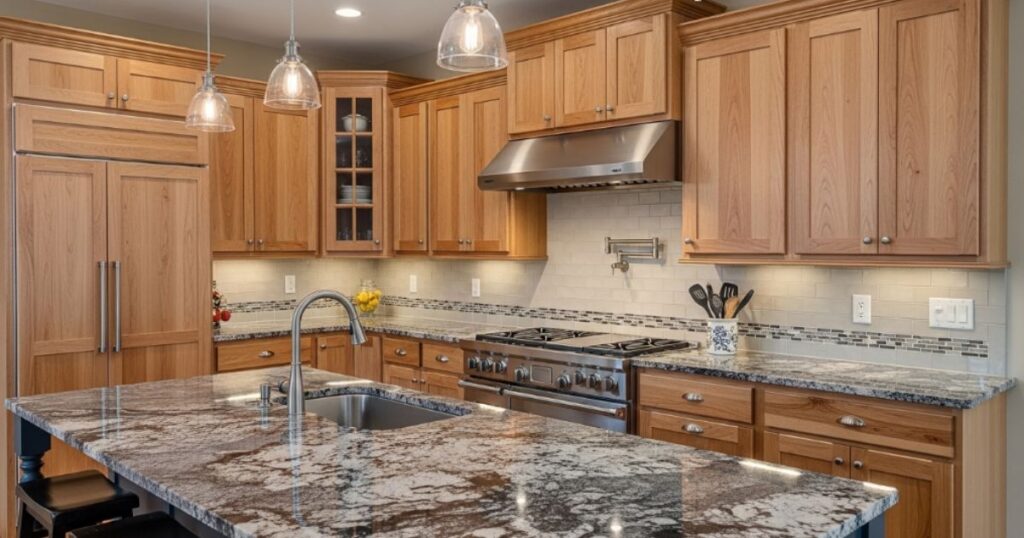
Granite with beige, brown, or soft charcoal veining picks up hickory’s natural tones without overwhelming them. Speckled granite in neutral tones is a particularly harmonious pairing. One word of caution: avoid granite with very busy, high-contrast patterns when combined with hickory’s already active grain, the result can feel cluttered. Stick to quieter granite options.
Hickory Kitchen Cabinets with White Countertops
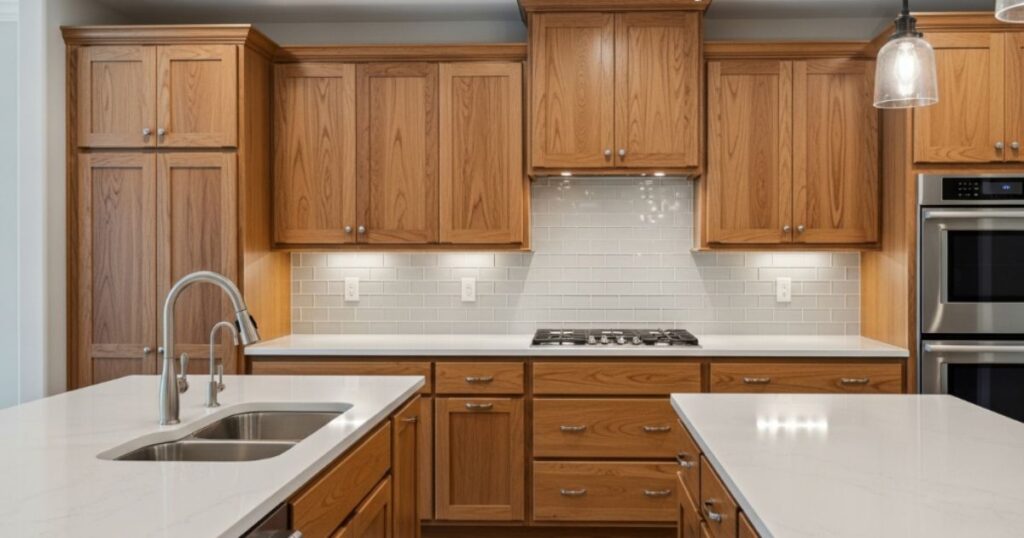
White quartz or a marble-look surface instantly brightens the kitchen and lets the wood grain become the clear focal point. This is the right move if you want a lighter, airier feel it works especially well in modern, Scandinavian, or transitional kitchen designs. Creamy white tends to feel more harmonious with hickory than a stark, bright white.
What Flooring Goes With Hickory Cabinets?
The biggest mistake to avoid: matching your floor wood species directly to your hickory cabinets. It creates what designers call a “wooden box” effect too much of the same thing with no visual separation.
Here’s how to choose flooring that complements rather than competes:
- Hardwood flooring: Light-toned species like white oak, ash, or birch provide clean contrast. If you want darker hardwood, go significantly darker than the cabinets to create clear separation.
- Tile flooring: Large-format tiles in neutral tones beige, taupe, warm gray, or slate work beautifully. Stone-look porcelain tiles are especially effective in rustic or farmhouse hickory kitchens.
- Laminate flooring: Choose cooler-toned wood looks in gray-brown or driftwood finishes to balance hickory’s warm grain.
- Luxury vinyl plank: Weathered oak or light driftwood LVP is a durable, budget-friendly option that contrasts well and handles moisture better than real wood.
Best Hardware for Hickory Cabinets
Hardware is where you can reinforce or shift the overall feel of your kitchen. With hickory cabinets, the right pull or knob either enhances the rustic warmth or adds a modern counterpoint.
| Hardware Finish | Best Style Match |
| Matte black | Modern, industrial, rustic kitchens creates strong contrast |
| Brushed nickel | Transitional and contemporary clean, versatile, low-maintenance |
| Antique bronze | Traditional and rustic designs warm, rich, classic |
| Oil-rubbed bronze | Farmhouse and vintage kitchens adds depth and aged character |
| Satin brass | Modern organic and natural hickory styles subtle warmth and elegance |
For farmhouse and rustic kitchens, oversized bin pulls or cup pulls on lower cabinets make a strong visual statement. For modern or transitional kitchens, slim bar pulls keep things clean and streamlined.
Cost Considerations for Hickory Cabinets
Hickory cabinets sit in the mid-to-upper price tier of hardwood cabinetry. Because of the wood’s density, it’s harder to machine and mill than softer species and that additional labor shows up in the price.
General pricing ranges (per linear foot):
| Cabinet Type | Estimated Cost per Linear Foot |
| Stock hickory cabinets | $80–$150 |
| Semi-custom hickory cabinets | $150–$250 |
| Custom hickory cabinets | $250–$500+ |
Custom hickory kitchen cabinets will add cost, but also give you better craftsmanship, exact sizing for your space, and a wider range of finish and door style options. For most homeowners doing a full kitchen, a semi-custom hickory build represents the best balance between quality and budget.
Keep in mind: hickory’s longevity means fewer replacements over time. The higher upfront cost often proves to be better long-term value than cheaper alternatives.
How to Choose Hickory Cabinets, Maple Cabinets, and Oak Cabinets
Hickory vs Maple Cabinets
Maple has a much smoother, more consistent appearance and takes paint exceptionally well. If you want uniformity or a painted finish, maple is the better choice. Hickory wins when you want bold natural character, extreme durability, and a wood that makes a visual statement on its own.
Hickory vs Oak Cabinets
Red oak has a traditional look with a slightly pinkish hue and a prominent but less dramatic grain than hickory. White oak offers more neutral tones. Hickory is measurably harder than both oak species and produces a livelier, more rustic visual. Oak is slightly easier to work with and tends to cost a touch less.
| Feature | Hickory | Oak | Maple |
| Grain Pattern | Bold, dramatic, highly varied | Prominent, straight | Smooth, very uniform |
| Color Variation | High light/dark streaks | Medium reddish or golden | Low consistent tone |
| Janka Hardness | ~1,820 lbf | ~1,290 lbf (red oak) | ~1,450 lbf |
| Cost | Higher | Moderate | Moderate |
| Best For | Rustic, farmhouse, modern organic | Traditional, transitional | Contemporary, painted finishes |
Designing Small Kitchens with Hickory Cabinets
Hickory’s bold grain and color variation can feel overwhelming in a small space if not handled carefully. Here’s how to make it work beautifully:
Go for Light or Natural Hickory Finishes
Lighter stain finishes reflect more light and make a compact kitchen feel more open. Reserve dark stains for larger kitchens with plenty of natural light. A clear coat over natural hickory is often the best choice for small spaces.
Incorporate Glass-Front or Open Shelving
Replace some upper cabinet doors with glass-front panels or remove them entirely for open shelving. This breaks up the visual density of the wood grain, creates depth, and lets you display dishware that adds color and personality.
Add Under-Cabinet Lighting
LED strips mounted beneath wall cabinets serve two purposes: they improve task lighting on the countertop, and they cast a warm glow across the hickory grain that makes the wood look even richer. It’s a low-cost upgrade with a high visual payoff.
Play with Vertical Space
When floor space is limited, go tall. Extending hickory cabinets all the way to the ceiling maximizes storage and draws the eye upward, making the room feel taller. A contrasting paint color on the ceiling can further enhance the effect.
Maintenance Tips for Hickory Kitchen Cabinets
Hickory is tough, but it still needs consistent care to look its best over time.
- Dust weekly using a soft microfiber cloth. Hickory’s deep grain texture can trap dust and grease particles over time.
- Clean gently with a lightly damp cloth and a mild dish soap solution. Avoid abrasive cleaners, bleach, or ammonia-based products that can strip the finish.
- Dry immediately after wiping. Standing moisture on wood surfaces even a sealed hardwood can cause warping or finish clouding over time.
- Polish occasionally using a wood-safe cabinet polish or conditioner, especially on natural-finish hickory. This maintains the luster and provides a layer of protection.
- Protect from UV light. Direct sunlight over time can yellow or fade hickory’s finish. Use window treatments or UV-filtering film on kitchen windows to slow this process.
- Inspect hardware annually. The weight of solid hickory doors can cause hinges to loosen gradually. Tighten screws and replace worn hardware as needed.
Conclusion
These Hickory Kitchen Cabinets Design Tips will help you create a kitchen you love. Hickory wood is strong, beautiful, and timeless. It works well in rustic, farmhouse, and modern kitchens. Pick the right colors, countertops, and hardware. Small choices make a big difference.
Keep these Hickory Kitchen Cabinets Design Tips in mind during every step. Choose light finishes for small kitchens. Use contrasting countertops for a balanced look. Clean and maintain your cabinets regularly. Following these Hickory Kitchen Cabinets Design Tips gives you a kitchen that stays beautiful for years. Hickory cabinets are a smart and stylish investment.
FAQ’s
Are hickory cabinets still in style?
Yes hickory cabinets remain popular in 2025 and beyond, particularly in rustic, farmhouse, and modern organic kitchen designs. Their natural grain and durability give them a timeless quality that trends rarely diminish.
What is the best way to finish hickory kitchen cabinets?
A clear or light stain finish is ideal it showcases hickory’s bold grain and natural color variation without masking its character. Avoid heavy opaque paint, as it hides the wood’s most distinctive features.
What are the disadvantages of hickory wood?
Hickory’s main drawbacks are its high color variation (not ideal for those who prefer a uniform look), its weight (heavier than oak or maple, requiring sturdy hinges), and its density, which makes it harder and more costly to machine and install.
Does hickory darken over time?
Yes like most hardwoods, hickory naturally shifts to a slightly deeper, richer tone as it ages and is exposed to light. This is generally considered a desirable quality that adds to its character.
What backsplash works best with hickory cabinets?
Subway tile in soft white or warm gray is a classic, clean choice. For rustic kitchens, natural stone mosaic or slate tile works beautifully. Avoid very busy, multi-color backsplash patterns hickory’s grain is already visually active and needs a quieter backdrop.

