
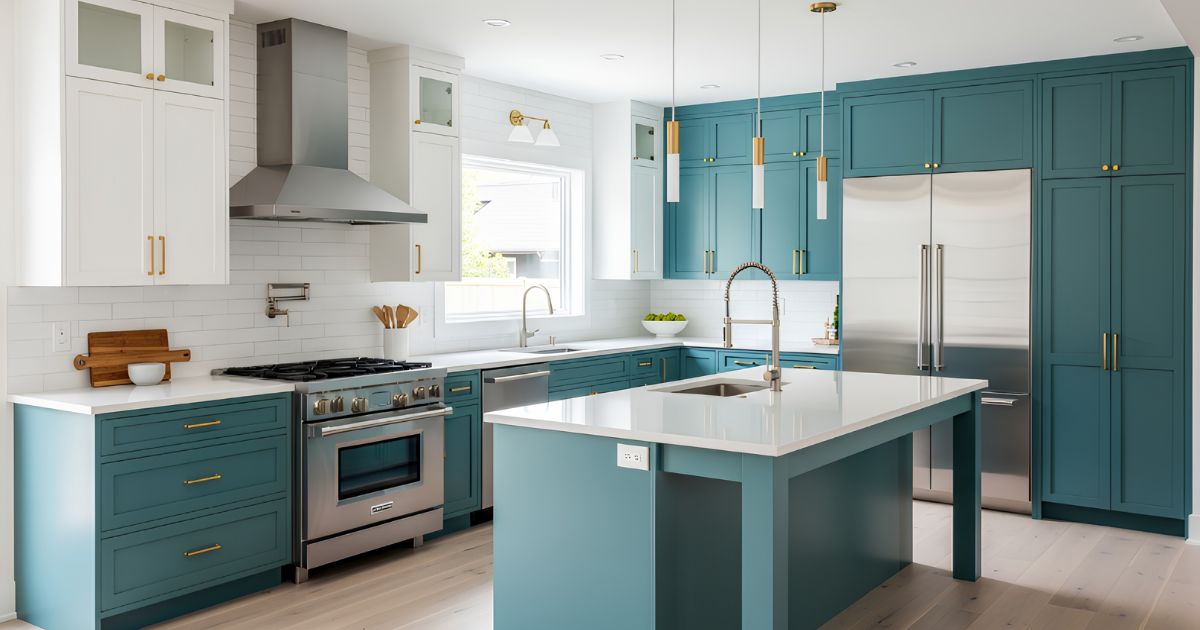

If you’ve been staring at the same white or gray cabinets for years, teal might be exactly the refresh your kitchen needs. Teal kitchen cabinets have surged in popularity and for good reason. This rich, versatile hue brings depth, personality, and a timeless elegance that neutrals simply can’t match. Whether you’re planning a full kitchen renovation or just a cabinet repaint, this guide covers everything: the best teal shades, ideal countertop pairings, hardware choices, decorating tips, and how to keep your cabinets looking stunning for years.
What Is Teal?
Teal sits at the intersection of blue and green on the color spectrum. It’s a medium-to-dark cyan that carries the calming quality of blue and the freshness of green. Psychologically, teal is associated with balance, clarity, creativity, and rejuvenation making it one of the most emotionally resonant colors you can bring into a space where your family gathers daily.
In kitchen design, teal isn’t a single shade. It spans a wide spectrum, from soft aqua pastels to deep jewel-toned hues. This range is exactly what makes it so adaptable across different kitchen styles and sizes.
Why Choose Teal Kitchen Cabinets?
Teal offers a compelling middle ground bold enough to make a statement, refined enough to remain timeless. Here’s why more homeowners and designers are reaching for this color:
- Versatility across styles: Teal works in modern, traditional, coastal, rustic, and farmhouse kitchens alike.
- Timeless appeal: Unlike ultra-trendy colors, teal has held its ground in interior design for decades.
- Complements a wide range of materials: From marble to butcher block, brass to matte black, teal plays well with almost everything.
- Creates visual depth: Teal adds dimension to kitchens that might otherwise feel flat or ordinary.
- Brightening effect: Lighter teal shades can open up a compact kitchen and reflect natural light beautifully.
- Emotional resonance: As a color linked to calm and creativity, teal makes your kitchen feel like a genuinely enjoyable space to be in.
Popular Teal Shades for Kitchen Cabinets
| Shade Type | Tone | Best For | Pairs Well With |
| Light Teal | Soft, pastel aqua | Coastal, Scandinavian, farmhouse | White countertops, natural wood |
| Mid Teal | Balanced blue-green | Transitional, eclectic | Quartz, gray tile, brass hardware |
| Dark Teal | Deep, jewel-toned | Modern, industrial, upscale | Marble, black hardware, gold accents |
| Muted Teal | Dusty, aged tone | Rustic, vintage | Copper, reclaimed wood, stone |
Light Teal Kitchen Cabinets
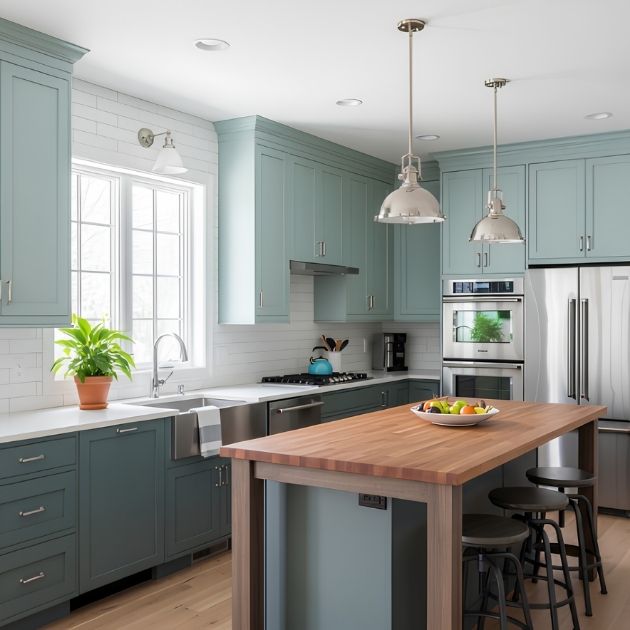
Light teal shades bring an airy, breezy vibe to any kitchen. Think soft aquas and muted blue-greens that lean toward the coastal or Scandinavian aesthetic. These tones work especially well in smaller kitchens or rooms with limited natural light, since they help reflect brightness rather than absorb it.
Sherwin-Williams’ “Tidewater” or Behr’s “Aqua Smoke” are popular choices in this category. Light teal pairs beautifully with crisp white countertops, shiplap walls, and open wood shelving for a clean, effortless look.
Dark Teal Kitchen Cabinets
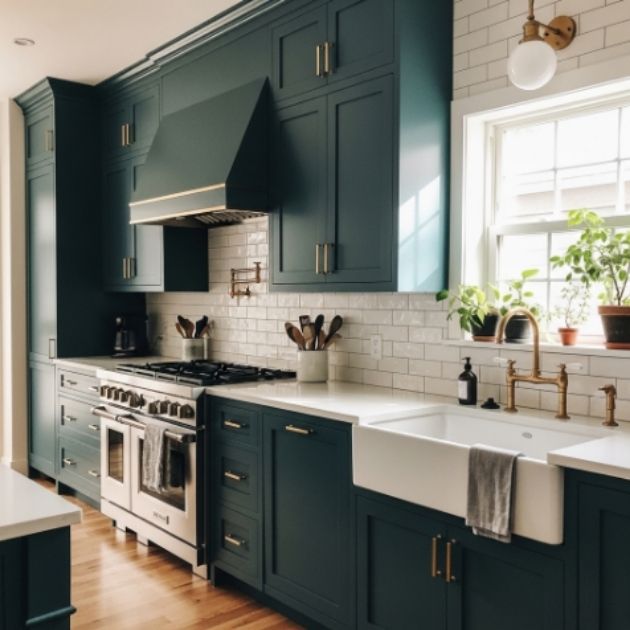
Deep, jewel-toned teal is where drama and luxury meet. These shades think “Gulfstream” by Sherwin-Williams or “Vintage Teal” by Behr suit upscale modern kitchens, mid-century designs, and industrial spaces.
Dark teal cabinets command attention. Balance them with lighter countertops or walls so the room doesn’t feel too enclosed. Brass or gold hardware is the natural companion here, creating a high-end, boutique-kitchen feel.
Teal Kitchen Cabinets in Different Design Styles
Modern Kitchens
In a modern kitchen, teal shows up on sleek flat-panel cabinet doors with minimal hardware. The key is restraint let the color do the talking. Pair dark teal flat-panels with waterfall quartz countertops, under-cabinet LED lighting, and stainless steel or matte black fixtures. The result is sophisticated and boldly contemporary.
Traditional Kitchens
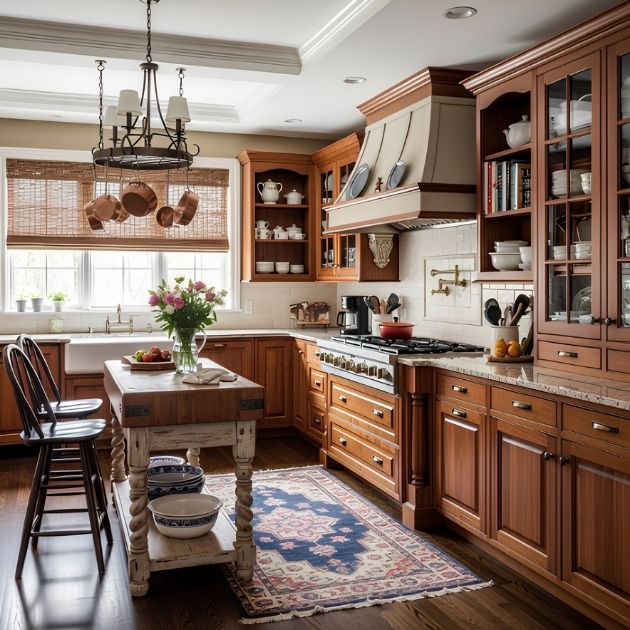
Traditional kitchens lean into detail: raised-panel doors, crown molding, and furniture-style legs. Teal in this context is typically a softer, slightly muted shade that feels rich without being overwhelming. Pair it with cream or off-white walls, polished nickel hardware, and subway tile backsplashes to maintain that classic warmth.
Transitional Kitchens
Transitional style bridges the gap between traditional and modern and teal handles this balancing act particularly well. A mid-teal shaker cabinet paired with a marble countertop, natural wood accents, and brushed brass hardware hits that sweet spot between cozy and current. This is arguably the most popular design approach for teal cabinets today.
Rustic Kitchens
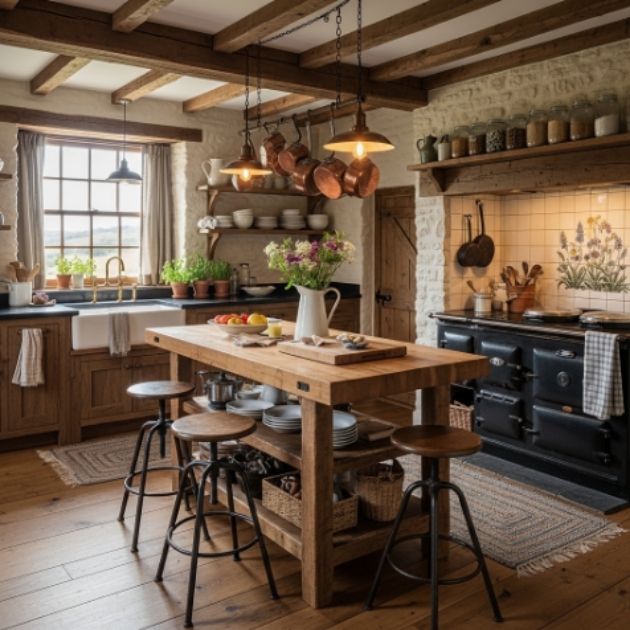
Rustic teal kitchens are full of character. Distressed or matte-finish teal cabinets, reclaimed wood countertops, farmhouse sinks, and antique bronze hardware create a space that feels warm, lived-in, and deeply personal. Pair teal with earthy browns, creams, and exposed brick or beam details for an old-world charm that never goes out of style.
Pairing Teal Cabinets with Countertops and Backsplashes
Choosing the right countertop and backsplash is critical when working with a color as distinctive as teal.
White Marble or Quartz
White marble or quartz countertops are the most universally flattering pairing for teal cabinets. The clean white surface provides a crisp, luxurious contrast that prevents the teal from overwhelming the space. The subtle veining in marble picks up cooler tones and harmonizes beautifully with teal’s blue-green nature.
Butcher Block Wood
Warm butcher block countertops soften the cool side of teal, creating a cozy, organic balance. This pairing works especially well in farmhouse and transitional kitchens. The natural grain of the wood introduces texture and warmth that complements teal without competing with it.
Black Countertop
For a bold, high-contrast look, black granite or matte black quartz paired with dark teal cabinets creates a dramatic, upscale kitchen aesthetic. This combination works best when lighter elements white walls, natural wood floors, or metallic fixtures are present to prevent the space from feeling too heavy.
Subway Tile Backsplash
Classic white subway tiles are a timeless and safe choice with teal. They offer clean visual separation between countertop and cabinet while keeping the focus on the teal color. For a more dynamic take, try stacked subway tiles or a slightly off-white grout to add subtle variation.
Mosaic Tiles
Mosaic tile backsplashes allow you to echo teal’s own color family seafoam, aqua, and sage green tiles work particularly well. For those who want contrast, a warm terracotta or cream mosaic brings an earthy, Mediterranean feel to the space.
Complementing Teal Cabinets with Hardware
Hardware is the jewelry of your kitchen and with teal cabinets, the right choice makes a significant difference.
| Hardware Finish | Best Teal Pairing | Style Match |
| Brass / Gold | Dark teal | Modern, transitional, glam |
| Matte Black | Any teal shade | Contemporary, industrial |
| Polished Nickel / Chrome | Light teal | Classic, timeless |
| Antique Bronze / Copper | Muted or rustic teal | Rustic, vintage |
| Glass or Ceramic Knobs | Light teal | Cottage, farmhouse, eclectic |
A few practical tips: always test hardware samples directly on your cabinet door in your kitchen’s lighting before committing. Teal’s undertones can shift under different light conditions, and what looks great in a showroom may read differently at home. When in doubt, brass is nearly universally flattering against teal.
Add Decorating with Teal Kitchen Cabinets
A great cabinet color is only the beginning. How you style the rest of the kitchen determines whether the space feels cohesive and intentional.
Incorporate Natural Elements
Plants, woven baskets, wooden cutting boards, and ceramic bowls bring organic warmth to a teal kitchen. A small potted herb garden on the windowsill or a cluster of succulents on open shelving softens the boldness of teal and connects the interior to the natural world.
Use Neutral Anchors
Let teal be the star by keeping surrounding surfaces neutral. White, beige, warm gray, or soft cream walls anchor the space and give the eye somewhere to rest. Avoid adding other bold colors in large quantities teal works best when it’s the clear focal point.
Add Metallic Accents
Gold, brass, or copper accents whether in light fixtures, faucets, or decorative objects bring warmth to teal’s cool tones. Even small details like a brass soap dispenser or copper pendant light can elevate the entire kitchen.
Layer Textures
Teal is a strong color, and layering textures prevents the space from feeling one-dimensional. Combine matte cabinet finishes with a glossy tile backsplash, rough-textured stone countertops with smooth painted walls, or woven textiles with smooth ceramics. Texture adds depth that makes a teal kitchen feel curated rather than flat.
Open Shelving
Floating shelves in natural wood above or beside teal cabinets create visual breathing room. They break up the expanse of cabinet color, display your personality through curated dishware and décor, and introduce warmth. This is particularly effective in smaller kitchens where solid teal cabinetry on every surface might feel overwhelming.
Seasonal Accents
One of teal’s underrated qualities is how well it serves as a backdrop for seasonal decorating. Swap in warm copper and terracotta accents for autumn, fresh white and coral for summer, cozy knit textiles and amber tones for winter, and soft florals for spring. Your teal cabinets stay constant while the accessories shift the mood effortlessly.
Tips for Choosing the Right Shade of Teal
Getting the shade right is the most critical decision in the whole process. Here’s how to approach it:
- Assess your kitchen’s natural light. North-facing kitchens with cool light can make dark teal feel heavy opt for a mid-tone or lighter shade. South-facing kitchens handle deep teal beautifully.
- Look at your existing flooring and walls. Warm wood floors pair best with warmer teal tones. Cool gray floors lean into deeper blue-teal shades.
- Test paint swatches don’t skip this step. Paint a large swatch (at least A4 size) on the actual cabinet door and observe it at different times of day morning, midday, and evening under artificial light.
- Consider the finish. Matte finishes feel sophisticated and understated. Satin finishes are more practical for kitchens (easier to clean). Gloss finishes maximize light reflection in darker spaces.
- Think long-term. Choose a shade you can live with for 10+ years, not just what’s trending. Classic teal tones like blue-green jewel tones age gracefully; highly trendy neon-adjacent shades may feel dated quickly.
How to Maintain and Care for Teal Kitchen Cabinets
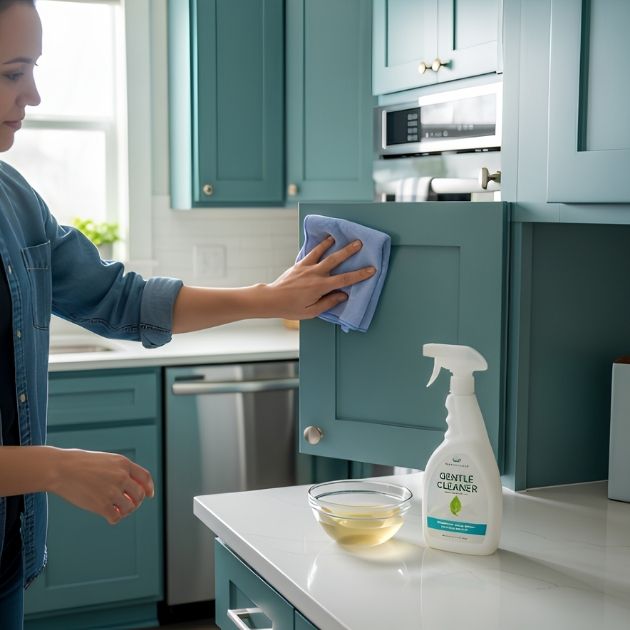
Teal cabinets whether painted, lacquered, or factory-finished need consistent upkeep to stay vibrant and chip-free.
Daily habits:
- Wipe down surfaces with a soft, damp microfiber cloth after cooking.
- Clean spills and grease immediately to prevent staining or finish degradation.
- Avoid hanging wet dish towels over cabinet doors.
Weekly care:
- Use a mild soap (like diluted Ivory dish soap) with a damp cloth for a more thorough clean.
- Pay extra attention to high-touch areas around handles and hinges.
What to avoid:
- Abrasive sponges or scouring pads these will scratch and dull the finish.
- Harsh chemical cleaners, bleach, or solvent-based products.
- Excessive moisture always dry cabinets after wiping.
- Direct steam from kettles, dishwashers, or cooktops over extended periods.
Long-term maintenance:
- Inspect hinges and hardware periodically and tighten any loose screws.
- Touch up minor chips with a matching paint pen or touch-up kit.
- Consider a professional refinishing every 8–12 years to restore the finish and color depth.
- Protect cabinets near the stove with a heat shield if necessary.
With consistent care, quality teal cabinets can look fresh and vibrant for 15–25 years.
Conclusion
Teal kitchen cabinets are far more than a passing trend they’re a design choice that brings lasting beauty, emotional richness, and remarkable versatility to one of the most important rooms in your home. Whether you gravitate toward a soft, coastal aqua or a deep, moody jewel tone, there’s a teal shade that can work beautifully with your space, your style, and your existing materials.
The key is thoughtful planning: choose the right shade for your lighting, pair it with complementary countertops and hardware, style it with natural and textural accents, and maintain it consistently. Do that, and your teal kitchen will be the room everyone talks about and that you genuinely love coming home to every day.
Ready to make the leap? Start with a few paint swatches, hold them up against your countertops and floor, and let the transformation begin.

