
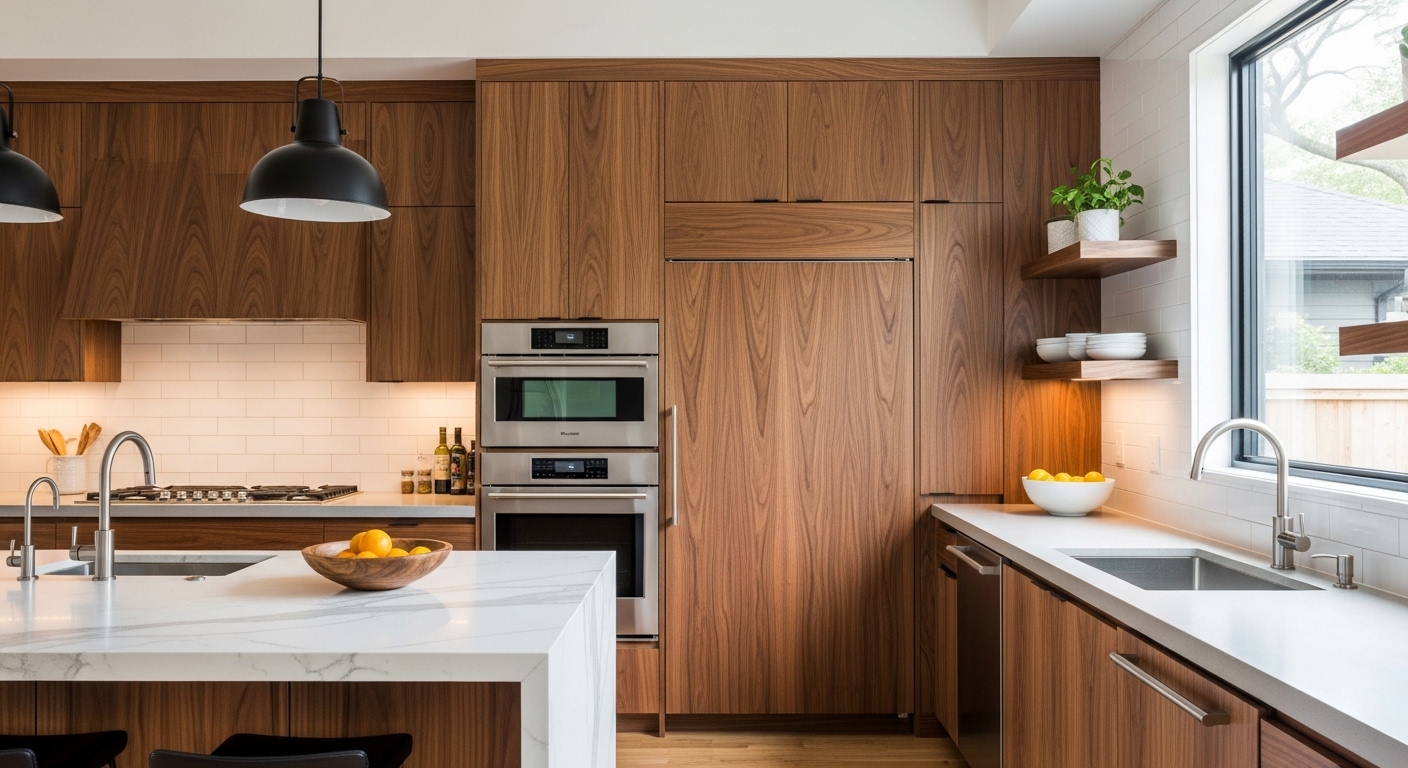

Walnut kitchen cabinets are having a serious moment in home design. And honestly, it’s not hard to see why. The wood is warm. The grain is bold. Every cabinet looks slightly different, which gives your kitchen a personality you simply can’t buy with painted MDF.
But walnut isn’t just about looks. It’s a durable hardwood that holds up well in a busy kitchen. It pairs beautifully with white countertops, black stone, or warm brass fixtures. It suits modern layouts and mid-century styles equally well. Whether you’re doing a full renovation or just replacing the cabinetry, walnut is a choice you won’t regret. This guide covers everything — the real pros and cons, the best color options, popular styles, what finishes work, and exactly what walnut kitchen cabinets cost in 2026
What Are Walnut Cabinets?
Walnut cabinets are kitchen cabinetry crafted from walnut hardwood a premium North American wood prized for its naturally rich color and distinctive grain. The wood ranges from warm tan sapwood to deep espresso-brown heartwood, often with streaks and figuring that make each cabinet door genuinely one of a kind.
You’ll find walnut wood kitchen cabinets in two primary forms:
- Solid walnut milled entirely from walnut lumber; the most premium and long-lasting option
- Walnut veneer a thin walnut layer bonded over a plywood or MDF core; more affordable while retaining the look
Both options deliver the visual warmth and grain character walnut is known for. The right choice depends on your budget, kitchen use, and how long you plan to stay in the home.
Related Post: 11 Ideas for Decorating Above Kitchen Cabinet
Pros of Walnut Kitchen Cabinets
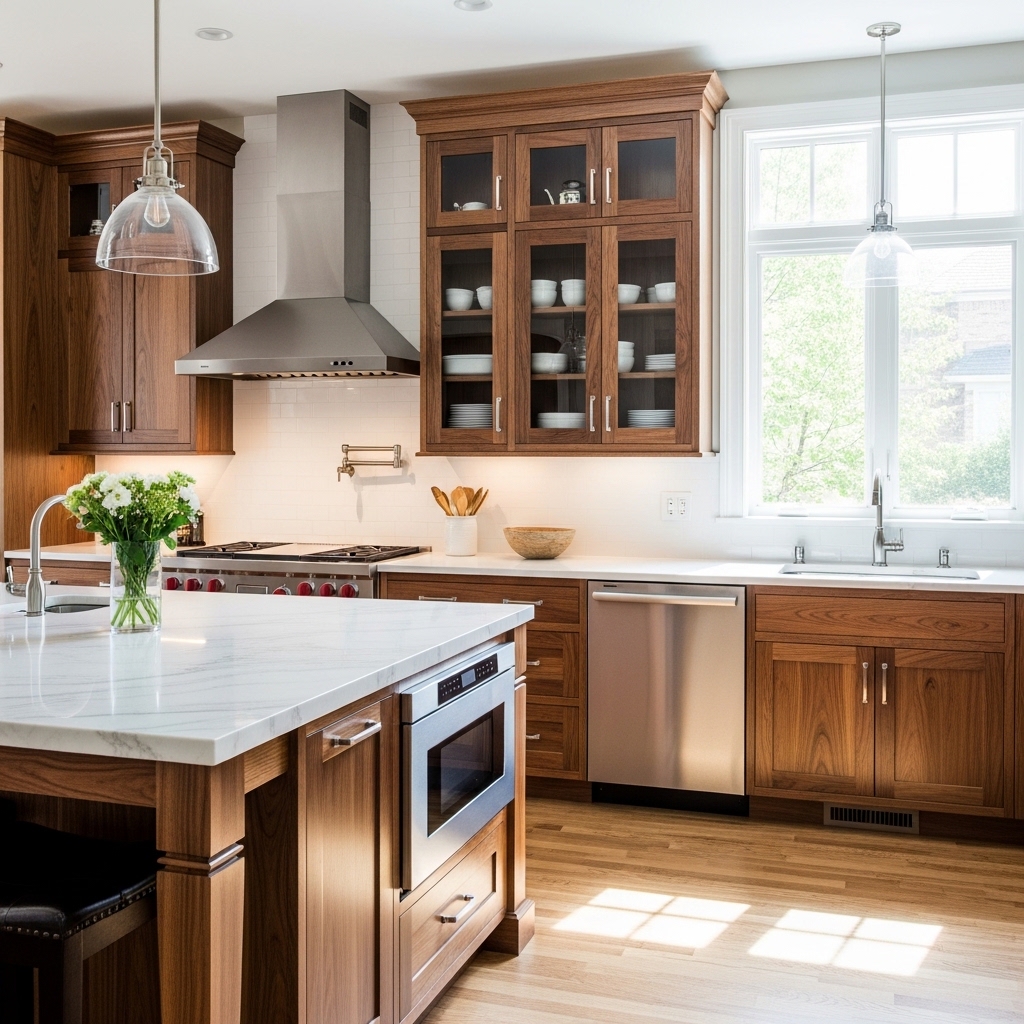
1. Exceptional Visual Appeal Walnut’s natural grain variation means no two cabinets look identical. The wood develops a lustrous patina over time, adding character rather than looking worn. Few wood species command the same sense of refinement without needing paint or heavy staining.
2. Impressive Durability Walnut ranks around 1,010 on the Janka hardness scale harder than cherry and teak, though softer than oak and maple. It holds up well to daily kitchen use, resists warping with proper finishing, and handles humidity reasonably well for a hardwood.
3. Design Versatility Whether your kitchen leans modern, mid-century, rustic, or transitional, walnut adapts. It pairs naturally with matte black hardware, brushed gold fixtures, white quartz, and concrete countertops alike. Very few wood species cross that many aesthetic boundaries.
4. Increases Home Resale Value Kitchens with walnut cabinetry consistently attract higher appraisals. Buyers associate walnut with quality craftsmanship, so the investment tends to return well at resale.
5. Ages Beautifully Unlike painted cabinets that chip or lighter woods that yellow, walnut deepens and enriches with age. Sunlight exposure actually mellows the darker tones into a warm, golden-brown that most homeowners love.
Cons of Walnut Kitchen Cabinets
1. Higher Cost Walnut typically costs 15–30% more than maple and significantly more than oak or birch. Budget-conscious remodelers may find the material price alone stretches their renovation funds.
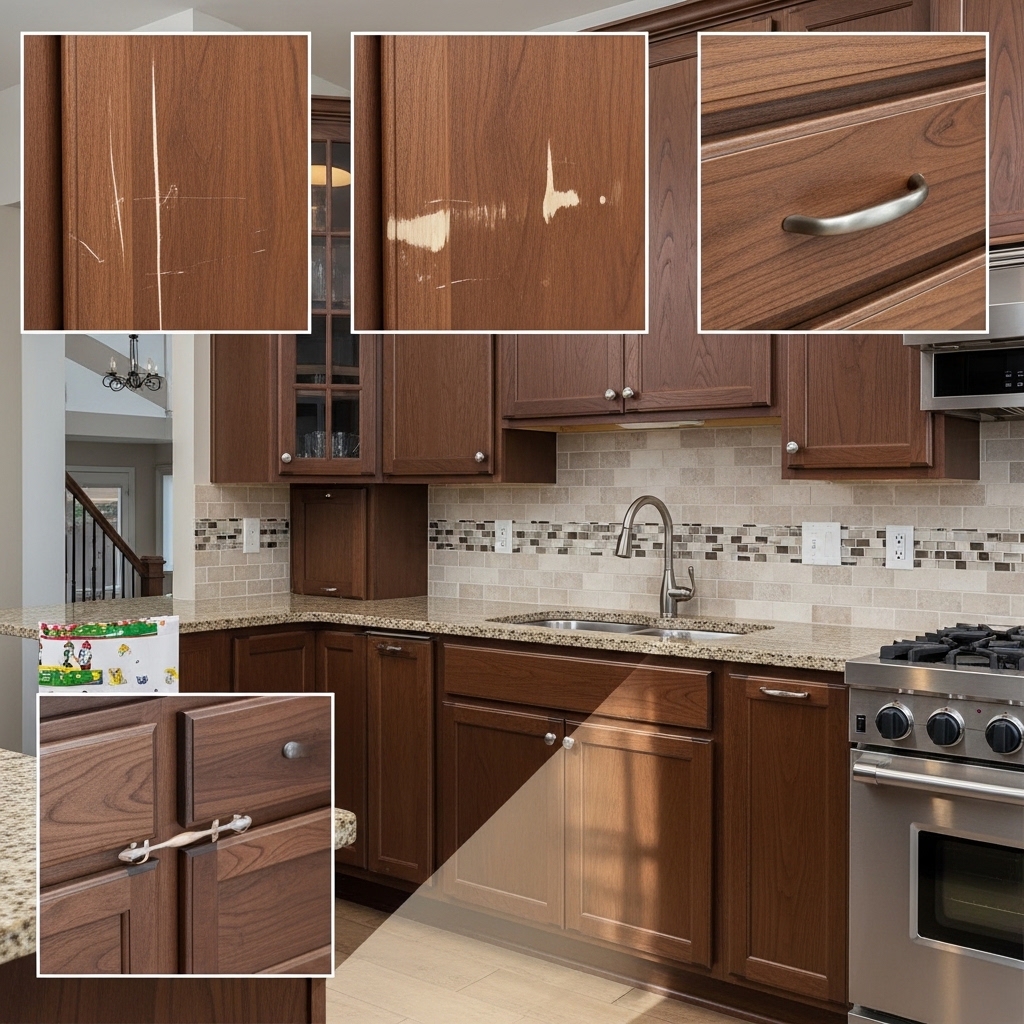
2. Softer Than Some Hardwoods Despite being a hardwood, walnut is more susceptible to dents and deep scratches than oak or hard maple. Busy kitchens with young children or heavy cooking activity may show wear faster.
3. Can Make Small Kitchens Feel Darker The deep tones of walnut absorb light rather than reflect it. In a kitchen without ample natural light or a white-painted ceiling, dark walnut cabinets can make the space feel enclosed.
4. Limited Availability Black walnut is a North American species and isn’t as widely available as oak or maple. Lead times for custom walnut cabinetry can be longer, and matching replacement pieces years later may be challenging.
5. Requires Consistent Maintenance Walnut needs periodic oiling or resealing to maintain its surface and prevent drying. Spills should be wiped immediately, and harsh chemical cleaners should be avoided entirely.
The Best Walnut Kitchen Cabinet Colors
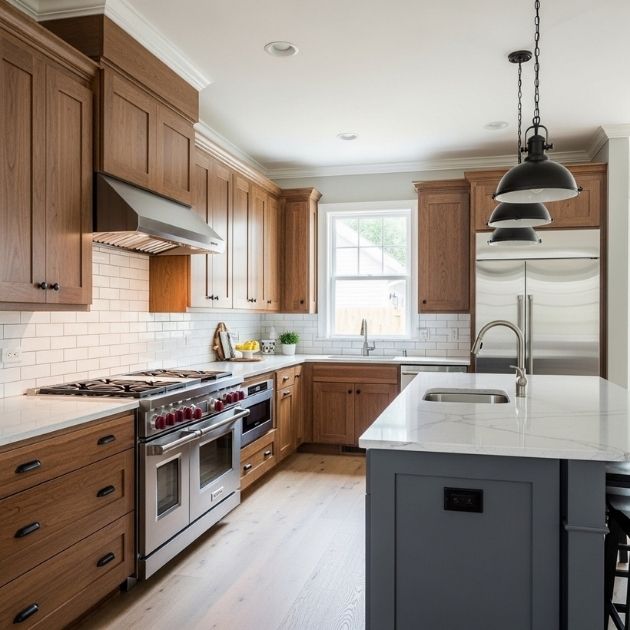
One of walnut’s strengths is its natural color range, which spans from light honey tones to near-black depths. Understanding these variations helps you plan lighting, countertops, and flooring with precision.
Dark Walnut Cabinets
Dark walnut cabinets feature the wood’s deepest heartwood tones rich chocolate browns often enhanced with an oil or dark stain finish. This variation works best in spacious, well-lit kitchens where the drama of dark cabinetry can breathe. Paired with white stone countertops or a light backsplash, dark walnut creates a striking contrast that photographs beautifully and looks impressive in person.
Light Walnut Kitchen Cabinets
Light walnut includes more of the sapwood the creamy tan outer ring of the walnut log. These cabinets have a warmer, more casual feel and work well in Scandinavian-inspired, farmhouse, or transitional kitchens. If your kitchen lacks natural light or you’re working with a smaller footprint, light walnut is far more forgiving than its darker counterpart.
Black Walnut Cabinets
Black walnut is a distinct species Juglans nigra and is the most prized variety for cabinetry. Its heartwood displays a cool, dark purple-brown tone with distinctive straight or wavy grain. Black walnut cabinets lean toward moody luxury and pair beautifully with matte black fixtures, leathered granite, and warm brass hardware for a high-end, editorial aesthetic.
Popular Styles in Walnut Kitchen Cabinet Design
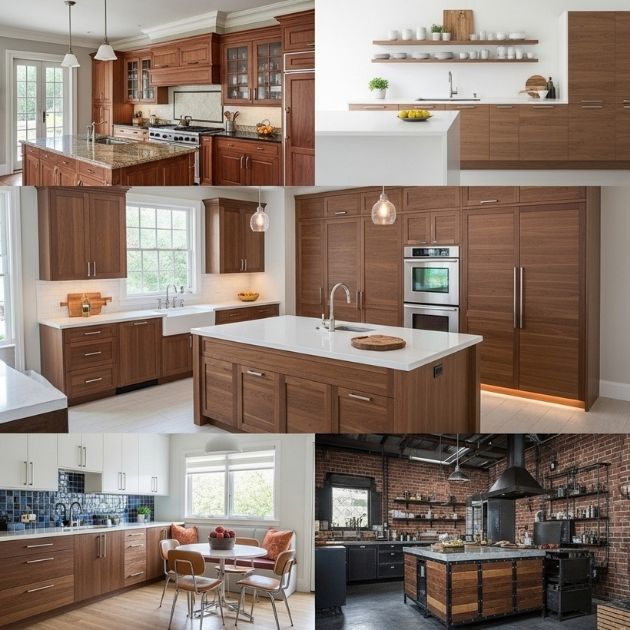
Modern Walnut Kitchen Cabinets
Modern walnut kitchens focus on clean lines, flat-panel (slab) doors, and minimal ornamentation. The grain of the wood does the decorative work. These kitchens often feature handle-less push-to-open mechanisms, waterfall quartz islands, and integrated appliances. The result is a sleek, gallery-like space where the natural wood texture is the hero.
Key pairings: White or concrete countertops, matte black hardware, large-format tile flooring, recessed lighting.
Mid Century Modern Walnut Cabinets
Mid-century modern kitchens are walnut’s natural home. The style originated in the 1950s and 60s when walnut was the go-to material for furniture and interiors. Today, mid-century walnut kitchens feature tapered-leg islands, retro pendant lighting, open shelving, and warm earth-tone accessories. The wood’s organic warmth anchors the style’s blend of function and sculptural beauty.
Key pairings: Terrazzo or geometric tile floors, vintage brass fixtures, sage green accents, open shelving.
Contemporary Walnut Kitchen Cabinets
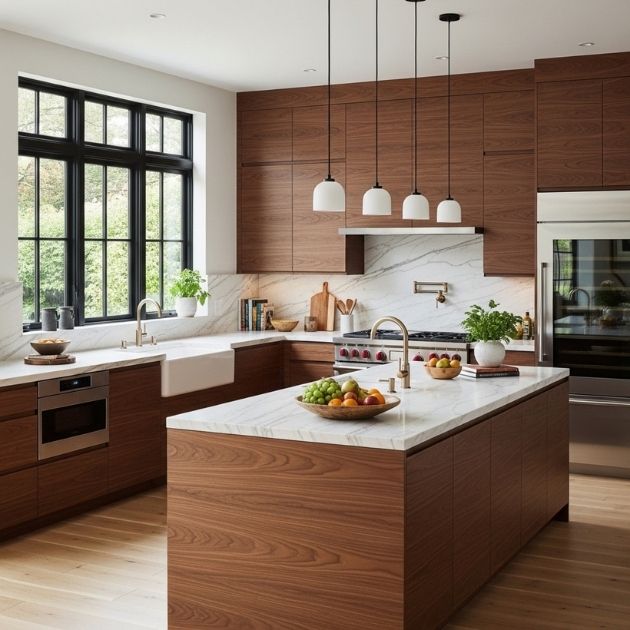
Contemporary kitchens balance walnut’s warmth with bold, often contrasting materials glossy lacquer upper cabinets, veined quartz countertops, or large mirrored backsplashes. The goal is to keep walnut grounded and current rather than rustic. Two-tone cabinet layouts walnut lowers with white or light gray uppers are particularly popular in this category.
Key pairings: Quartz countertops, geometric tile backsplash, stainless steel appliances, brushed nickel hardware.
Shaker Walnut Kitchen Cabinets
Shaker-style walnut cabinets offer timeless craftsmanship with a simple recessed-panel door design. The shaker frame allows walnut’s grain to show through both the rails and the center panel, creating a layered visual depth. This style transitions easily from traditional to transitional kitchens and is especially popular in home renovations where the goal is enduring rather than trendy.
Key pairings: Subway tile, farmhouse sinks, oil-rubbed bronze fixtures, butcher block countertops.
Walnut Cabinet Doors Finish Inspirations
The right finish transforms walnut from a raw material into a polished design statement. Here are the most popular options:
| Finish Type | Look & Feel | Best For |
| Natural/Clear Oil | Raw grain, warm honey tone | Organic, Scandinavian, mid-century kitchens |
| Matte Lacquer | Flat sheen, cozy depth | Modern, minimalist designs |
| Satin Lacquer | Soft glow, versatile | Most kitchen styles |
| Semi-Gloss | Light-reflective, refined | Contemporary, larger kitchens |
| Wire-Brushed | Textured, rustic character | Farmhouse, industrial kitchens |
| Ceruse/Limed | Light-filled grain, airy | Transitional, coastal designs |
A natural oil finish preserves the most authentic walnut character and is easy to spot-repair. Lacquered finishes offer more protection from moisture and stains but require professional refinishing if damaged.
Do you need a complete and exquisite Walnut kitchen? Let us help you solve this problem.
At George Custom Cabinetry, we specialize in full walnut kitchen builds from initial design consultation to final installation. Whether you’re envisioning a moody black walnut island or a light-toned walnut shaker layout, our team can source premium walnut, match your existing architecture, and deliver a finished kitchen that exceeds expectations. Contact us to schedule your free design consultation.
Pair Walnut Cabinets with Other Kitchen Elements
Walnut is a rich, warm wood choosing complementary materials is key to keeping the kitchen balanced and cohesive rather than heavy.
Walnut Cabinets with White Countertops
White quartz or marble countertops are the most popular pairing for walnut cabinets, and it’s easy to see why. The crisp contrast between white stone and warm brown wood creates visual balance while keeping the kitchen bright. White countertops also photograph well, making this combo a favorite in home staging and real estate listings.
Walnut Cabinets with Black Countertops
For a bolder, more dramatic kitchen, black countertops leathered granite, black quartz, or black soapstone intensify walnut’s depth. This pairing leans moody and luxurious and works best in larger kitchens with strong overhead lighting. Pair with brass or copper hardware to add warmth and prevent the palette from feeling too heavy.
Classic Hardwood Floors
Pairing walnut cabinets with hardwood floors requires tonal awareness. The safest approach is to choose flooring with a different tone than the cabinets lighter white oak or ash flooring creates contrast and prevents the kitchen from looking monotonous. If you prefer to match the warmth, use medium-toned flooring with visible grain differences to distinguish the two surfaces.
Sleek Tiles
Large-format porcelain tiles in light gray, cream, or matte white complement walnut without competing. For a bolder look, zellige tiles in earthy green, aged ivory, or soft terracotta add texture and handmade character that harmonizes with walnut’s organic feel.
Hardware and Fixtures
- Matte black hardware modern, graphic, and high contrast
- Brushed gold or brass warm, luxurious, and mid-century friendly
- Brushed nickel cool and clean, excellent for contemporary kitchens
- Oil-rubbed bronze rustic warmth, ideal for traditional and farmhouse styles
Avoid polished chrome with warm walnut the cool shine tends to clash with the wood’s inherent warmth.
Cost Considerations for Walnut Cabinets
Understanding walnut cabinet pricing requires looking at both material type and construction method. Here’s a clear breakdown:
Walnut Veneer vs. Solid Walnut
| Type | Price Per Linear Foot | Notes |
| Walnut Veneer | $120 – $250 | Thin walnut layer over plywood/MDF core; excellent appearance at lower cost |
| Solid Walnut | $400 – $600+ | Full hardwood construction; most durable and refinishable |
Veneer is a smart choice for homeowners who love the walnut aesthetic but need to manage costs. It’s stable, looks nearly identical to solid wood, and is less prone to seasonal movement.
RTA (Ready-to-Assemble) Walnut Cabinets
Cost: $100 – $250 per linear foot
RTA walnut cabinets are the most budget-friendly entry point. They arrive flat-packed and require self-assembly, which reduces labor and shipping costs significantly. The trade-off is limited size options, standard door styles, and less refined joinery. Best for DIY-inclined homeowners on a tight budget.
Semi-Custom Walnut Cabinets
Cost: $300 – $450 per linear foot
Semi-custom cabinets offer adjustable sizing, a broader selection of door styles and finishes, and better construction quality than stock options. This is the sweet spot for most homeowners enough personalization to feel bespoke without the price tag of full custom work.
Custom Walnut Cabinets
Cost: $500 – $1,200+ per linear foot
Fully custom walnut cabinetry is built to your exact specifications dimensions, door profiles, interior fittings, and finish are all selected by you. Premium solid walnut with specialty finishes or unique features (integrated lighting, hidden storage, hand-applied staining) can push costs even higher. For a 20-linear-foot kitchen, expect a total investment starting around $10,000 and extending well past $24,000 for high-end builds.
Choose George Custom Walnut Cabinet for a Warm Kitchen
If you’re serious about walnut cabinetry, the quality of your manufacturer matters more than any other single decision. George Custom Cabinetry offers handcrafted walnut kitchens built with premium North American black walnut, precision joinery, and a finish process that brings out the grain’s full depth and warmth.
What sets us apart:
- Premium wood sourcing sustainably harvested black walnut with careful grain matching
- Full design support from mood board to final layout, our designers work with your space
- Flexible options veneer, solid, or hybrid builds at multiple price points
- In-house finishing matte, satin, and custom stain options applied and cured in controlled conditions
Every kitchen we build is treated as a long-term investment because that’s exactly what it is.
Maintenance and Care Tips for Walnut Kitchen Cabinets
Walnut is a beautiful wood, but like all natural materials, it rewards consistent care. Follow these practices to protect your investment:
- Wipe spills immediately walnut is moderately moisture-resistant but not waterproof; standing liquid will stain or swell the wood over time
- Use pH-neutral cleaners avoid bleach, ammonia, and abrasive scrubbers; a damp cloth with mild dish soap is all you need for daily cleaning
- Oil annually food-safe walnut oil or Danish oil keeps the grain nourished and prevents drying or cracking
- Avoid direct sunlight UV exposure lightens walnut over time; if the kitchen receives direct sun, use window treatments or UV-filtering glass
- Keep humidity consistent use a kitchen exhaust fan to prevent steam buildup; prolonged humidity fluctuations cause wood to expand and contract
- Re-seal every few years lacquered or polyurethane-finished cabinets benefit from a light re-coat every 5–7 years in high-use kitchens
Stunning Walnut Kitchen Renovations
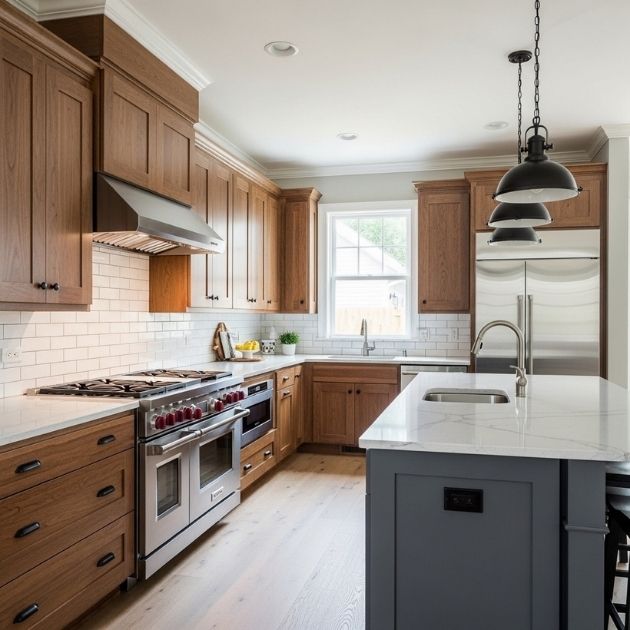
Case 1: Modern Walnut Kitchen with White Countertops
A 280-square-foot open-plan kitchen in Seattle was transformed using flat-panel black walnut lower cabinets, white lacquer upper cabinets, and a waterfall white quartz island. The two-tone layout kept the space bright while showcasing walnut where it had the most visual impact. Matte black fixtures and recessed LED lighting completed the look. Total cabinetry investment: approximately $28,000.
Takeaway: Two-tone layouts are ideal for smaller kitchens walnut below, light color above, to maintain openness.
Case 2: Mid-Century Inspired Walnut Cabinet Kitchen
A 1960s ranch-style home in Austin was updated with warm-toned walnut shaker cabinets, a zellige tile backsplash in sage green, and a vintage brass faucet. The homeowners kept the original terrazzo flooring, which paired perfectly with the wood’s warm undertones. This renovation respected the home’s original character while modernizing the function. Total cabinetry investment: approximately $18,500.
Takeaway: Walnut is the ideal mid-century modern material it doesn’t fight the era, it defines it.
Case 3: Luxury Black Walnut Kitchen with Custom Features
A custom build in Chicago featured full solid black walnut cabinetry floor to ceiling, leathered black granite countertops, and integrated under-cabinet lighting. The kitchen included pull-out pantry systems, a butler’s pantry in matching walnut, and hand-applied satin finish throughout. Total cabinetry investment: approximately $62,000.
Takeaway: For luxury builds, black walnut with leathered stone creates an unmatched depth and editorial quality that’s difficult to replicate in any other material.
Conclusion
Walnut kitchen cabinets represent one of the most rewarding investments in residential design. The wood’s natural warmth, distinctive grain, and long-term durability justify the higher cost especially when you consider how well walnut ages compared to painted or lower-grade wood alternatives.
Whether you’re drawn to the dramatic depth of black walnut, the lighter energy of sapwood-rich panels, or the classic lines of walnut shaker doors, there’s a walnut kitchen built for your vision and your budget. The key is choosing the right construction type (veneer, RTA, semi-custom, or custom), pairing it with complementary materials, and maintaining it with the care this remarkable wood deserves.
If you’re ready to take the next step, start with a consultation bring your kitchen dimensions, inspiration images, and a realistic budget. The right cabinetry partner will help you get the most out of every linear foot.

