
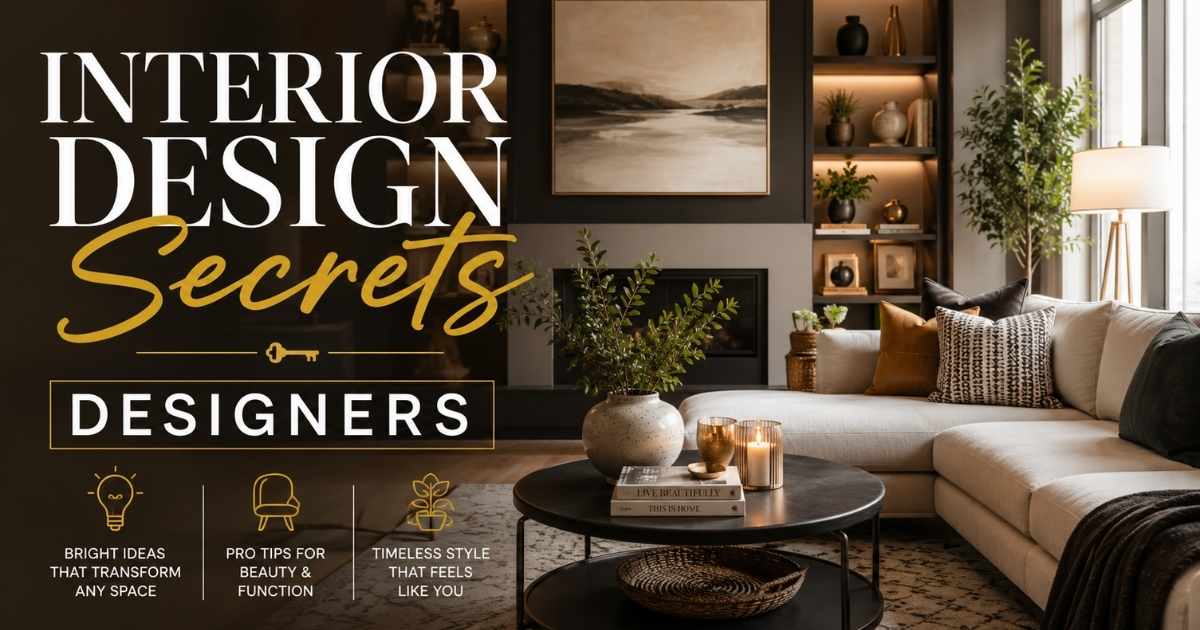

Most people think beautiful homes require big budgets. That is not true. The real difference lies in knowledge. Professional designers follow specific principles that beginners never learn. These are the interior design secrets designers use on every single project quietly and consistently. They think about light before paint. They consider proportion before style. They plan the room before buying a single piece of furniture.
Once you understand these hidden techniques, everything changes. Your rooms will feel more balanced, more intentional, and more polished without spending more money. Whether you are decorating a small apartment or a full family home, these secrets apply to every space. This 2026 guide breaks down exactly what the professionals know, so you can finally design your home with real confidence.
Why Most Beginners Struggle With Interior Design
Beginners often treat interior design as a shopping exercise. They buy a sofa they love, hang artwork they like, and add decorative accessories without ever considering how each element relates to the others. The result is a room that feels cluttered, inconsistent, or visually flat.
The real problem is a lack of design thinking. Professionals do not start with products. They start with light, proportion, spatial flow, and emotional feeling. Once you shift your approach from “what looks nice” to “what works together,” everything changes.
Related POST: Home Upgrading Advice Mintpalment Guide for USA Homeowners
Quick Overview of the 10 Interior Design Secrets
| Secret | Core Principle | Beginner Benefit |
| Layered Lighting | Depth and mood control | Makes rooms feel luxurious |
| Texture Over Color | Visual richness without paint | Designer-level interiors |
| Furniture Scale | Proportion before style | Avoids cramped or empty spaces |
| Neutral Palettes | Timeless base | Easier seasonal updates |
| Negative Space | Breathing room | Creates sophistication |
| Focal Points | Visual anchoring | Organized, intentional rooms |
| High Curtains | Height illusion | Larger-feeling rooms |
| Indoor Plants | Natural energy | Healthier, livelier spaces |
| Mix Old and New | Contrast and character | Unique, personal interiors |
| Rug Sizing | Spatial definition | Complete, grounded rooms |
Secret #1 – Professional Designers Always Start With Lighting
Light is the single most powerful tool in interior design. Before choosing paint colors, furniture, or accessories, experienced designers analyze how natural and artificial light move through a space throughout the day.
Why Layered Lighting Changes Everything
A single ceiling light creates a flat, institutional atmosphere. Professional interiors use at least three layers of light:
- Ambient lighting general illumination (ceiling fixtures, recessed lights)
- Task lighting focused light for specific activities (reading lamps, under-cabinet lights)
- Accent lighting decorative or directional (wall sconces, picture lights, LED strips)
This combination adds depth, warmth, and dimension that no amount of furniture spending can replicate.
Best Lighting Types for Every Room
| Room | Recommended Lighting |
| Living Room | Floor lamp + ambient + accent |
| Bedroom | Bedside table lamps + dimmable overhead |
| Kitchen | Under-cabinet task lighting + pendant lights |
| Bathroom | Vanity side lighting + warm overhead |
Warm-toned bulbs (2700K–3000K) are almost always the right choice for residential spaces. They make skin tones look healthy and interiors feel inviting.
Secret #2 – Luxury Interiors Rely More on Texture Than Color
Walk into any high-end hotel lobby or luxury apartment and you will notice something immediately the color palette is often quite restrained. What makes it feel rich is texture. Velvet cushions, a linen sofa, a wool rug, a marble side table, and a raw-wood shelf all working together create sensory depth that paint simply cannot.
How Textural Layering Creates a High-End Look
Professionals layer at least four to five distinct textures in every room. The contrast between hard and soft, rough and smooth, matte and glossy is what gives interiors their sophistication. A beige room with five different textures always looks more expensive than a colorful room with only one.
Easy Ways to Add Texture Without Spending More
- Swap flat cushion covers for woven, bouclé, or velvet options
- Add a jute or wool rug over smooth flooring
- Use open wooden shelving alongside painted walls
- Introduce ceramic or stone decorative objects
- Layer a textured throw blanket over upholstered furniture
Secret #3 – Furniture Scale Matters More Than Style
The most common and most damaging mistake beginners make is buying furniture without measuring the room. A beautiful sofa that is too large makes a room feel suffocating. A coffee table that is too small looks lost and disconnected.
Why Furniture Proportion Is More Important Than Style
Proportion creates visual harmony. When furniture is correctly scaled to the room, everything else artwork, lighting, accessories falls into place more naturally. Style preferences can always evolve, but bad scale creates permanent imbalance.
Common Furniture Sizing Mistakes to Avoid
- Buying a sofa longer than two-thirds of the wall it sits against
- Choosing a coffee table less than half the length of the sofa
- Hanging artwork too high (eye level is typically 57–60 inches from the floor)
- Using a rug too small for the seating group it anchors
- Filling a small room with multiple large accent chairs instead of one
Secret #4 – Neutral Color Palettes Never Go Out of Style
Designers who have been working for decades all say the same thing: clients who chose trendy colors always call back within a few years wanting to repaint. Clients who chose neutral foundations rarely do.
Why Designers Prefer Neutral Colors
Neutral palettes soft whites, warm beiges, greiges, muted sage, and earthy tones provide a flexible backdrop. They make rooms feel calm, and they allow furniture and art to become the focal point rather than competing with loud walls.
How to Add Accent Colors Effectively
Use the 60-30-10 rule:
- 60% dominant neutral (walls, large upholstery)
- 30% secondary tone (rugs, curtains, secondary furniture)
- 10% accent color (cushions, artwork, small decor objects)
This formula keeps spaces visually balanced while still allowing personality and color to shine through.
Secret #5 – Empty Space Is Part of Great Interior Design
More decor does not mean better design. This is one of the hardest lessons for beginners to internalize. Professional designers are just as intentional about what they leave out as what they include.
Why Negative Space Creates Sophistication
Empty space gives the eye a place to rest. It allows statement pieces to breathe and stand out. In cluttered rooms, nothing stands out because everything is competing for attention. In well-edited rooms, each piece feels deliberate and meaningful.
How to Avoid Visual Clutter
- Edit your shelves remove at least one-third of items currently displayed
- Group objects in odd numbers (3 or 5) rather than lining everything up
- Leave wall sections completely empty to frame artwork more powerfully
- Avoid covering every surface with decorative objects
Secret #6 – Every Room Needs a Strong Focal Point
Professionally designed rooms always have one dominant feature that draws the eye immediately upon entering. Without a focal point, rooms feel directionless and visually unsettling.
How Designers Create Visual Balance
Designers identify the natural focal point first usually the architectural feature with the most presence and arrange furniture to support and emphasize it. Everything else in the room serves a supporting role.
The Best Focal Points for Every Room
| Room | Ideal Focal Point |
| Living Room | Fireplace, large artwork, or feature wall |
| Bedroom | Upholstered headboard or dramatic window |
| Dining Room | Statement light fixture above the table |
| Home Office | Bookshelf wall or large window |
If a room lacks a natural focal point, designers create one with a large mirror, bold wallpaper panel, or an oversized piece of art.
Secret #7 – Hang Curtains Higher Than Your Windows
This is one of the simplest and most transformative tricks in professional interior design, and it costs nothing extra. Beginners almost always hang curtains just above the window frame. Designers hang them at the ceiling line or as close to it as possible.
Why Ceiling-Height Curtains Make Rooms Look Bigger
When curtains extend from ceiling to floor, they draw the eye upward, making ceilings appear taller and windows appear larger. The room immediately feels more expansive and more considered. This single change can make a standard apartment feel like a luxury space.
Choosing the Right Curtain Length
- Curtains should pool slightly on the floor or sit exactly at floor level
- Avoid curtains that stop at the windowsill or below the window
- Use floor-to-ceiling curtains even if the window itself is small
- Hang the rod 4–6 inches from the ceiling, not from the top of the window
Secret #8 – Indoor Plants Instantly Improve Interior Spaces
No professional designer stages a room without greenery. Plants add life, scale, and organic texture that no manufactured product can replicate. They also soften the visual hardness of furniture, floors, and walls.
Why Greenery Makes Homes Feel Healthier
Plants introduce natural elements that connect interiors to the outside world. Research consistently links biophilic design the incorporation of nature into living spaces with reduced stress, improved mood, and better air quality. In 2026, this principle is central to modern wellness-focused interior design.
Best Indoor Plants for Beginners
- Pothos nearly indestructible, trails beautifully from shelves
- Snake plant architectural form, thrives in low light
- Monstera deliciosa bold tropical statement for larger spaces
- Rubber plant sculptural and easy to maintain
- Peace lily elegant in low-light bedrooms
Secret #9 – Mix Modern and Vintage Furniture
Rooms furnished entirely from one era or one store look like showrooms, not homes. The most compelling and personality-rich interiors always combine pieces from different periods and styles.
Why Contrast Creates Character
Mixing a sleek modern sofa with a worn leather vintage armchair creates visual tension in the best possible way. It suggests that a real person with real taste and real history lives there. The contrast also prevents rooms from looking dated when trends shift.
Tips for Mixing Old and New Decor
- Anchor the room with one dominant style (modern or traditional) and introduce contrast sparingly
- Use color and texture as the bridge between old and new pieces
- Vintage lighting paired with contemporary furniture is a classic designer move
- Inherited or antique pieces carry emotional resonance that new furniture cannot replicate
- Avoid mixing too many styles two to three maximum per room keeps it cohesive
Secret #10 – Rugs Define the Entire Room Layout
A rug that is too small is arguably the single most common mistake in residential interior design. Designers use rugs not just as decorative elements but as spatial tools defining zones, anchoring furniture, and giving rooms a sense of completeness.
Why Bigger Rugs Create Better Flow
A large rug visually expands a space. It connects the furniture group into a cohesive unit rather than leaving pieces scattered across a floor. When a rug is too small, the room looks fragmented and the furniture appears to float.
Rug Placement Rules Designers Follow
- In living rooms, all front legs of the sofa and chairs should sit on the rug
- In dining rooms, the rug should extend at least 24 inches beyond the table on all sides
- In bedrooms, the rug should extend beyond the sides and foot of the bed by 18–24 inches
- When in doubt, size up a larger rug almost always looks better
Why Small Styling Details Matter More Than Expensive Furniture
Luxury interiors are not built with expensive furniture they are built with attention to finishing details. The way cushions are arranged, how books are stacked, the warmth of a light bulb, the height of a vase these micro-decisions collectively create the polished feeling that distinguishes professional interiors from amateur ones.
Designer Styling Tips That Transform Any Room
- Always style in odd numbers (groups of 3 or 5 feel more natural)
- Vary heights when grouping decorative objects
- Use books horizontally and vertically together on shelves
- Add one unexpected element per room (a sculptural piece, unusual material, or bold print)
- Consistently maintain one throughline of color throughout the space
Modern Interior Design Trends Dominating 2026
Personalization Is More Important Than Ever
The defining shift in 2026 interior design is away from catalog perfection and toward deeply personal spaces. Designers are encouraging clients to integrate meaningful objects travel mementos, heirlooms, handmade pieces alongside designed furniture. The most celebrated interiors today look lived-in, layered, and human.
Sustainable and Eco-Friendly Interiors
Sustainability is no longer a niche preference it is a mainstream design priority. Reclaimed wood, natural fiber textiles, low-VOC paints, and vintage or secondhand furniture are central to 2026 design practice. Beyond environmental benefit, these materials introduce authentic texture and warmth that mass-produced alternatives cannot.
Smart Home Design Trends
Integrated technology is increasingly invisible. Designers in 2026 prioritize concealing smart home devices within the aesthetic of the room hidden speakers, flush-mounted panels, and furniture designed around charging and cable management. The goal is a home that functions intelligently without looking like a tech showroom.
Interior Design Tips for Beginners
If you are just starting out, focus on these foundations before spending anything:
- Measure every room and create a simple floor plan
- Identify your existing focal point
- Assess your natural and artificial lighting
- Choose a neutral base palette before selecting furniture
- Set a realistic budget and prioritize quality in high-use pieces (sofa, bed, rug)
How to Design a House Interior Online
Several free and low-cost platforms allow you to visualize room layouts digitally before committing to furniture purchases. Tools like Roomstyler, Planner 5D, and IKEA’s online planner let you drag and drop furniture into scaled floor plans. This step alone prevents the expensive mistake of buying pieces that do not fit or work together.
How to Create 3D Interior Design Designs
For a more detailed visualization, tools like SketchUp Free, HomeByMe, and Planner 5D offer 3D modeling capabilities without requiring professional training. These platforms allow you to test lighting conditions, color combinations, and furniture arrangements before making any physical changes.
Interior Design Basics PDF Resources
Many reputable design schools and institutions offer free downloadable guides covering color theory, spatial planning, and furniture arrangement principles. The American Society of Interior Designers (ASID) and Houzz both maintain resource libraries accessible to beginners at no cost.
Interior Design Secrets Designers Share on Reddit
Communities like r/InteriorDesign and r/malelivingspace are excellent sources of real-world feedback and inspiration. Professionals and enthusiasts share before-and-after transformations, critique room layouts, and recommend budget-friendly sources. These communities are particularly useful for beginners who want honest, unfiltered perspective outside of curated magazine imagery.
Conclusion
The interior design secrets designers use every day are not complicated. They are simply unknown to most beginners. Start with lighting. Choose the right furniture scale. Layer textures instead of chasing colors. Hang curtains high. Add plants. Define your space with a proper-sized rug. These small decisions create big results. No expensive renovation required.
Now you have the same knowledge professionals use on every project. Apply these interior design secrets designers swear by one room at a time. You do not need to change everything at once. Focus on balance, proportion, and intention. A well-designed home is not about perfection. It is about creating a space that feels right, looks polished, and truly reflects you.

