
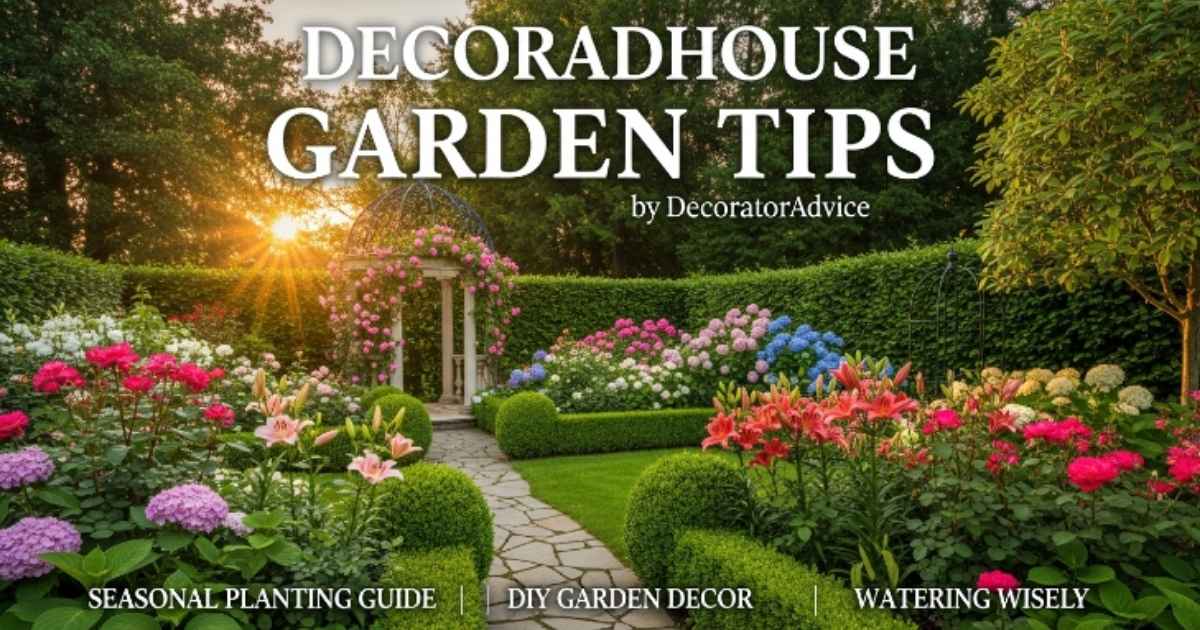

If you’ve ever looked at your outdoor space and thought, “I could do so much more with this,” you’re not alone. Most people have the desire but don’t quite know where to start. That’s exactly where decoradhouse garden tips by decoratoradvice come in. This approach makes garden design feel less overwhelming and a lot more enjoyable even if you’ve never touched a trowel in your life.
Whether you’re working with a sprawling backyard or a narrow balcony, the principles here are practical, flexible, and built around real life. No jargon. No expensive landscaping contracts. Just smart, clear advice that actually works.
Understanding the Concept Behind Decoradhouse Garden Design
At its heart, decoradhouse garden design is about intention. It’s not about stuffing your yard with as many plants and decorations as possible. It’s about choosing things that work together aesthetically, functionally, and naturally. Think of it like interior design, but outdoors.
The concept borrows from natural garden aesthetics, where less truly is more. Clean lines, purposeful planting, and a cohesive visual theme give your outdoor space a sense of calm. When everything has a reason to be there, your garden feels like a real extension of your home rather than a forgotten corner of your property.
Related Post: 23 Stunning Navy Blue and Burnt Orange Bedroom Ideas
Start with a Clear Vision and Purpose
Before you buy a single plant or piece of garden furniture, stop and ask yourself: what do I actually want from this space? It sounds simple, but most garden problems start here people skip the planning and jump straight to action.
Do you want a quiet retreat where you can sip your morning coffee? A play area for kids? A space to entertain guests on warm evenings? Your answer shapes everything the layout, the plants, the lighting, and even the type of soil you’ll need. A garden designed with a clear purpose always feels more complete than one built on impulse.
Designing a Layout That Feels Open and Natural
One of the most effective garden layout planning strategies is to think in zones. Instead of randomly scattering things around, divide your garden into sections a seating area here, a planting bed there, and a walkway connecting them. This creates flow and makes even a small space feel organized and spacious.
Layer your plants too. Taller shrubs or trees go at the back, medium-height plants in the middle, and low ground-cover plants in front. This adds visual depth and makes your outdoor living space look professionally designed even when it wasn’t. Keep pathways clear and wide enough to walk through comfortably, and always leave some breathing room between sections.
Choosing Plants That Actually Thrive
Here’s a truth most beginners learn the hard way: a beautiful plant in the wrong environment is just a dying plant. Knowing how to choose the right plants for your garden is one of the most important skills you can develop. Start by observing your space how many hours of sunlight does it get each day? Is the soil dry or moist? Is there a lot of wind?
Once you understand your conditions, selecting plants becomes much easier. Mix seasonal flowers with evergreen shrubs to keep things looking alive year-round. Group plants with similar watering needs together it saves time and prevents over- or underwatering. Best plants for low-maintenance gardens include lavender, ornamental grasses, hostas, and succulents. They’re resilient, attractive, and don’t demand much attention.
| Plant Type | Sunlight | Water Needs | Best For |
| Lavender | Full sun | Low | Borders, fragrance |
| Hostas | Shade | Moderate | Ground cover |
| Ornamental Grass | Full sun | Low | Texture, movement |
| Succulents | Full sun | Very low | Containers, rock gardens |
| Ferns | Shade/partial | Moderate | Woodland feel |
Building a Strong Foundation with Healthy Soil
Think of soil as the foundation of a house. You can have stunning architecture above ground, but if the base is weak, nothing holds. The same logic applies to your garden. Poor soil leads to weak plants, poor drainage, and a frustrating upkeep cycle that never ends.
Improving your soil doesn’t have to cost much. Start with these soil improvement techniques: add organic compost to increase nutrients, use mulch to retain moisture and suppress weeds, and check your soil’s pH if plants aren’t thriving. Most garden plants prefer a slightly acidic to neutral pH (around 6.0 to 7.0). Good drainage is also critical waterlogged soil suffocates roots quickly. If your garden holds water after rain, consider raised beds or adding grit to loosen the soil structure.
Keeping the Design Simple and Consistent
More isn’t better in garden design. Too many colors, textures, and styles in one space can make it look busy and stressful rather than beautiful and calming. Modern garden styling leans toward simplicity clean edges, a restrained color palette, and materials that complement each other.
Pick a theme and commit to it. That could be a Mediterranean style with terracotta pots and drought-resistant plants, a Japanese-inspired garden with gravel and bamboo, or a contemporary look with structured hedges and sleek furniture. Whatever direction you choose, keep your pots, planters, and furniture in similar materials or tones. Consistency ties everything together and makes your garden feel intentional rather than accidental.
Making the Most of Small Spaces
A small garden isn’t a limitation it’s a design challenge, and a fun one at that. Ways to make a small garden look bigger start with one powerful trick: go vertical. Walls, fences, and trellises become valuable planting real estate when floor space is tight.
Creative vertical gardening ideas for small spaces include wall-mounted planters, tiered shelving units, and climbing plants like jasmine or clematis that grow upward rather than outward. Multi-purpose furniture like a bench with built-in storage or a fold-out table helps keep things tidy. Here are some quick wins for small garden decoration:
- Use tall, narrow plants to draw the eye upward
- Choose furniture that folds or stacks away when not in use
- Hang string lights to create ambiance without taking up floor space
- Use a focal point a single eye-catching plant or sculpture to anchor the design
- Keep pathways clear to improve the sense of flow
Adding Decorative Elements with Purpose
Decorative garden features can genuinely elevate your outdoor space but only when used thoughtfully. A few well-placed elements have far more impact than a crowded collection of garden ornaments. The goal is to complement your plants, not compete with them.
Simple additions like soft solar-powered lighting, a small water feature, or a couple of decorative planters can completely transform the mood of your garden. Lighting in particular changes the feel of an outdoor space dramatically after dark. A pathway lined with warm lights or a spotlight on your favorite tree turns your garden into an inviting evening retreat. When adding decorative elements, always ask: does this add to the garden, or does it clutter it?
Maintaining Your Garden with Ease
A garden that takes hours of work every weekend quickly becomes something you dread. The best gardens are designed with maintenance in mind. If you know how to maintain a healthy garden year-round, you’ll spend less time working and more time actually enjoying your outdoor space.
Stick to a simple, consistent routine rather than doing everything at once. Water in the early morning to reduce evaporation. Deadhead flowers regularly so they keep blooming. Trim back overgrown plants before they overtake their neighbors. In autumn, clear dead material and add a layer of mulch to protect roots over winter. In spring, check for any damage and refresh your planting. These small, regular actions keep your garden healthy without ever feeling like a huge project.
Avoiding Common Mistakes
Even experienced gardeners make mistakes. But knowing the most common ones helps you sidestep them before they cause real problems. Overplanting is probably the biggest offender. It’s tempting to fill every gap immediately but plants need room to grow. What looks sparse today will often look lush in a season or two.
Other frequent mistakes include ignoring sunlight requirements (a shade plant in full sun will struggle no matter how well you water it), overwatering (which kills more plants than drought does), and choosing plants that don’t suit your local climate. Also, don’t neglect your eco-friendly landscaping choices using peat-free compost, collecting rainwater, and avoiding pesticides make your garden healthier for wildlife and the environment. Start small, observe carefully, and expand as you learn what works best in your specific space.
Creating a Space That Feels Personal
All the design tips in the world can’t substitute for personal meaning. The gardens people genuinely love spending time in aren’t necessarily the most polished ones they’re the ones that feel like the owner. Your favorite plants, a handmade feature, or a corner arranged exactly how you like it makes your garden truly yours.
Following decoradhouse garden tips by decoratoradvice gives you a framework but you fill it with personality. Maybe that means a herb garden just outside your kitchen door, a hammock strung between two trees, or a collection of mismatched vintage pots that make you smile every time you see them. Affordable ways to upgrade your garden don’t always involve spending money sometimes the most meaningful additions are the ones you make yourself.
Conclusion
Creating a beautiful, peaceful garden doesn’t require a massive budget or professional expertise. What it does require is a clear vision, thoughtful planning, and a willingness to start small and build gradually. The approach works precisely because it’s flexible, practical, adecoradhouse garden tips by decoratoradvicend rooted in common sense. Whether you’re redesigning an overgrown backyard or decorating a small balcony for the first time, these principles give you a solid foundation to build on.
Your garden is an extension of your home and a reflection of who you are. Give it the same care and intention you’d give any other room in your house and it will reward you with a space you genuinely love. Start with one change today and see where it takes you.

