
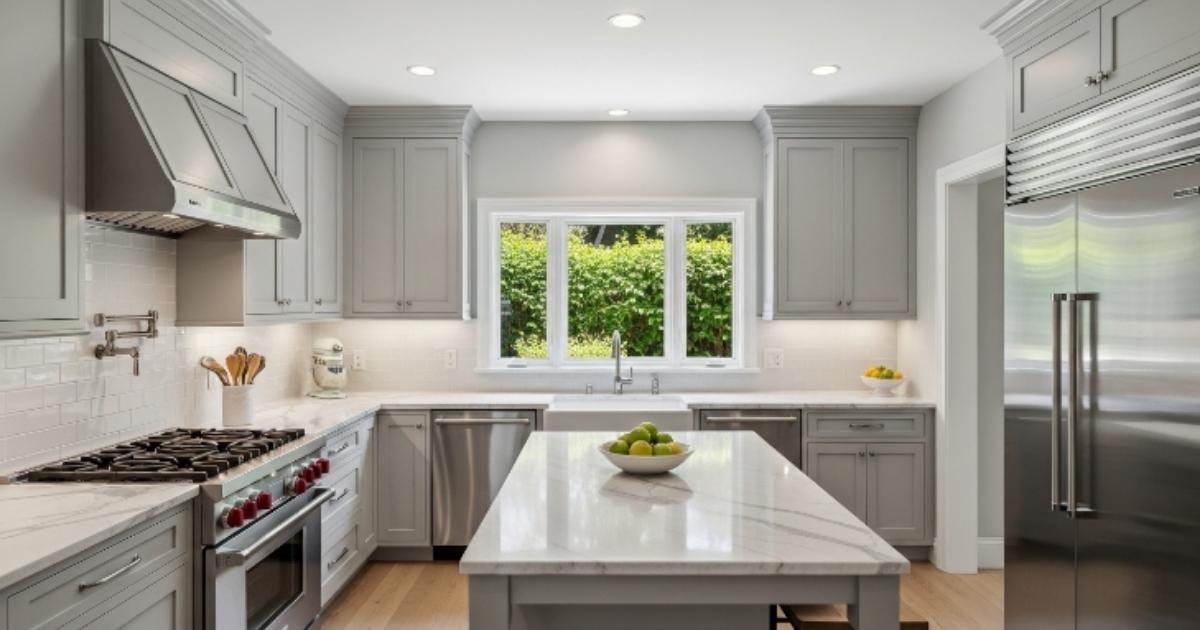

Gray kitchen cabinets are one of the smartest design choices you can make. They’re sleek, timeless, and work across styles from ultra-modern to warm farmhouse. But here’s the catch: gray is a chameleon. Its undertones shift depending on the light, the flooring, and yes the wall color beside it.
Pick the wrong wall color, and your gray cabinets can look dull, cold, or flat. Pick the right one, and the whole kitchen comes alive. This guide breaks down the best wall colors for gray kitchen cabinets, explains how warm and cool undertones work, and gives you real-life design inspiration to help you make a confident choice.
Best Wall Colors for Gray Kitchen Cabinets
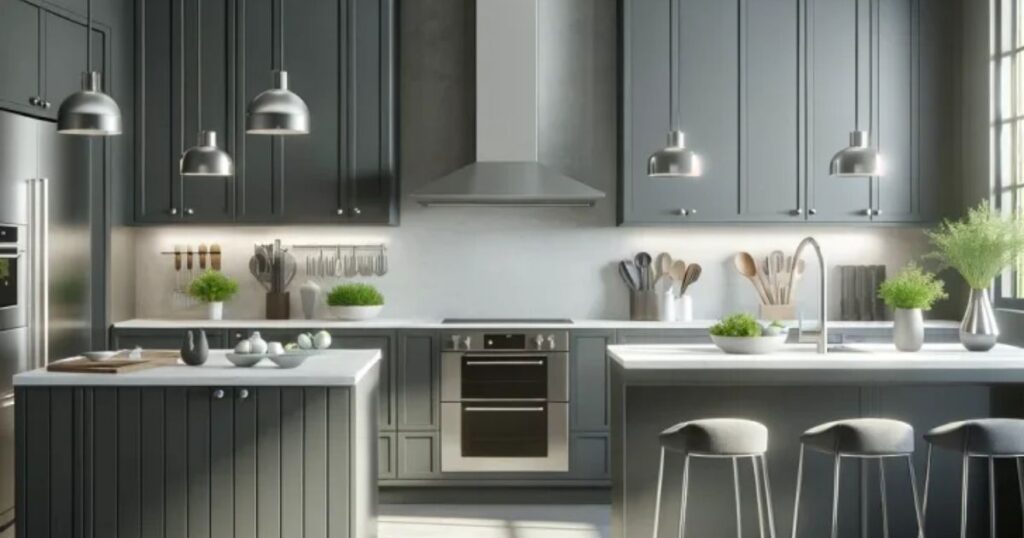
Before you open a paint swatch, look closely at your cabinets. Do they lean warm with hints of taupe, beige, or brown? Or do they run cool with undertones of blue, green, or purple? That single observation will guide every color decision that follows.
Related Post: The Ultimate Guide to Rustic Sage Green Kitchen Cabinets
Here are the top-performing wall colors based on design expertise and what’s trending in real kitchen renovations:
| Wall Color | Best For | Cabinet Tone Match |
| Crisp White | Modern, Minimalist | Both warm & cool gray |
| Soft Cream | Traditional, Transitional | Warm gray (greige, taupe) |
| Navy Blue | Bold, Classic | Light to medium gray |
| Light Gray | Monochromatic, Serene | Any shade of gray |
| Black | Dramatic, Contemporary | Light or medium gray |
| Sage Green | Earthy, Organic | Warm or neutral gray |
| Muted Red/Brick | Farmhouse, Cozy | Cool-toned gray |
| Soft Blue-Gray | Scandinavian, Calm | Cool gray |
White Walls with Gray Kitchen Cabinets
White is the most reliable partner for gray cabinets and for good reason. It creates a high-contrast, clean backdrop that makes even mid-range gray cabinets look designer-quality. The space instantly feels brighter, more open, and easier to style.
Not all whites are equal, though. Warm whites like Benjamin Moore’s Simply White work beautifully with greige or taupe-toned cabinets. Cool whites like Sherwin-Williams Extra White suit blue or green-undertoned grays. If your kitchen is small or doesn’t get much natural light, white walls are your safest and most effective bet.
Pro tip: Pair white walls with matte gray cabinets and brass or gold hardware for a look that feels both fresh and elevated.
Cream Walls with Gray Cabinets
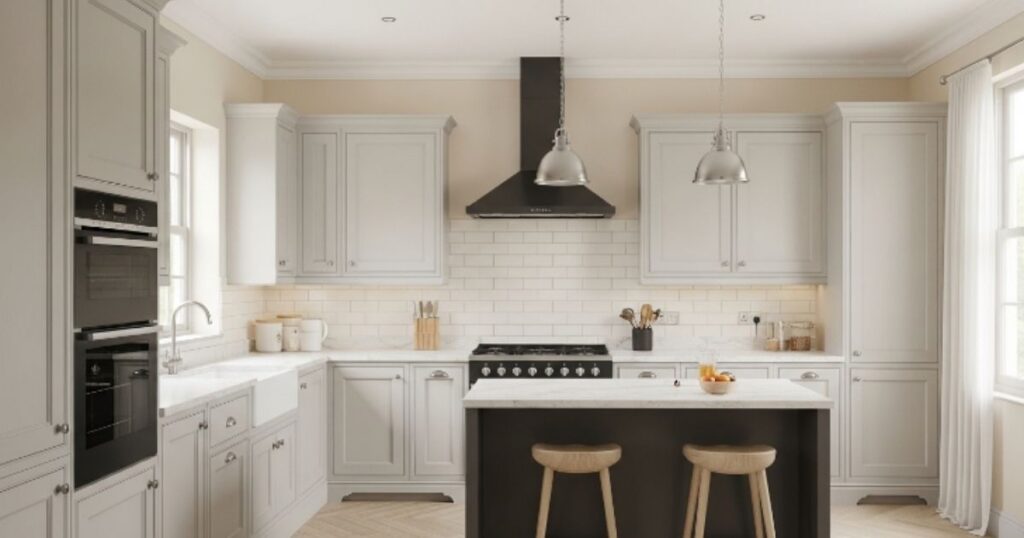
Cream sits in a sweet spot between white and beige. It adds warmth without taking over, making it ideal for kitchens where you want coziness without sacrificing a clean, polished look. This pairing works especially well with warm-toned gray cabinets the ones that carry hints of taupe or brown.
If you have wood flooring, butcher block countertops, or brass hardware, cream walls will tie those elements together beautifully. The result is layered, inviting, and anything but sterile.
Cream also does something clever: it softens the natural coolness of gray, making the overall kitchen feel warmer and more livable without adding a loud accent color.
Navy Blue Walls with Gray Kitchen Cabinets
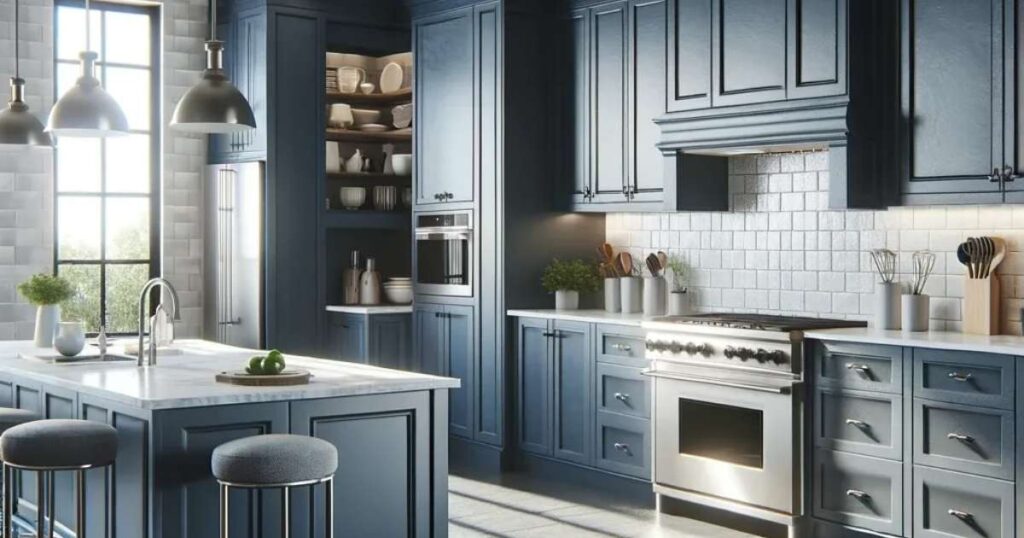
This is the bold choice and it earns its reputation. Navy blue walls with gray cabinets create a rich, dramatic contrast that looks both classic and contemporary. The depth of navy draws out the cool undertones in gray without making the space feel cold.
This combination works best in:
- Larger kitchens with good natural or overhead lighting
- Spaces with light to medium gray cabinets (avoid pairing navy with very dark gray, as the room will absorb too much light)
- Kitchens with gold or brass hardware, which adds warmth and keeps the look from feeling too serious
Think of this as your “designer look without the designer price tag.” Add warm wood accents or open shelving, and the space feels intentional and curated.
Light Gray or Dark Gray Walls
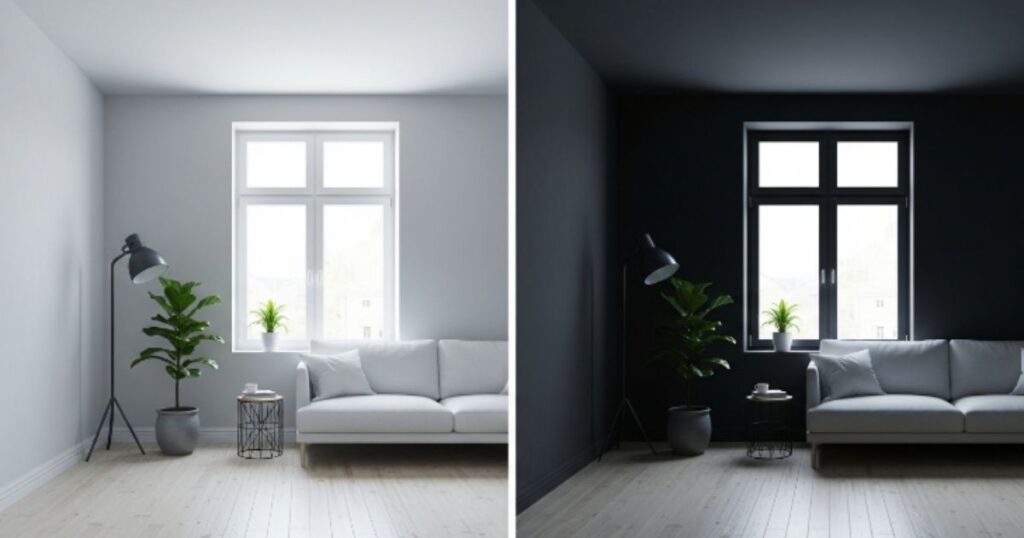
A monochromatic gray palette is one of the most sophisticated directions you can take. Here’s how to make it work:
Light gray walls + darker gray cabinets: The contrast between a soft dove gray wall and a deeper charcoal cabinet creates definition and depth. Use white countertops or backsplash tiles to keep things from feeling too heavy.
Matching gray tones (tone-on-tone): For a seamless, calming look, pair cabinets with a wall color that’s just a shade or two lighter. This works particularly well in open-plan kitchens where flow and cohesion matter. Add texture through materials linen, wood, matte tile to prevent the space from feeling flat.
Key rule: If going monochromatic, vary your finishes. Matte cabinets with a satin wall paint, or vice versa, adds visual interest without breaking the palette.
Black Walls with Gray Cabinets
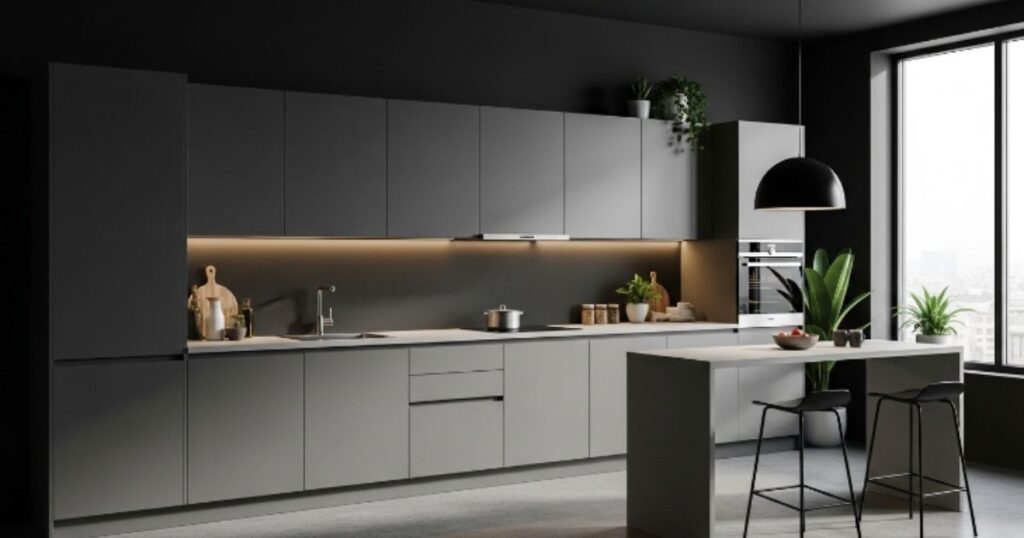
Black walls are the unexpected hero of this conversation. When paired with light or medium gray cabinets, they create a moody, high-contrast kitchen that looks both modern and bold. This isn’t just a trend it’s a design decision with staying power.
The trick is balance. Black walls work best when:
- Your cabinets are on the lighter end of the gray spectrum
- Your countertops or backsplash are white, marble, or light stone
- You have adequate lighting pendant lights, under-cabinet lights, or large windows
- Hardware is chrome, brushed nickel, or matte black for a cohesive finish
This combination is particularly striking in modern or industrial kitchen designs where sharp lines and strong contrasts are the point.
Red Walls with Gray Kitchen Cabinets
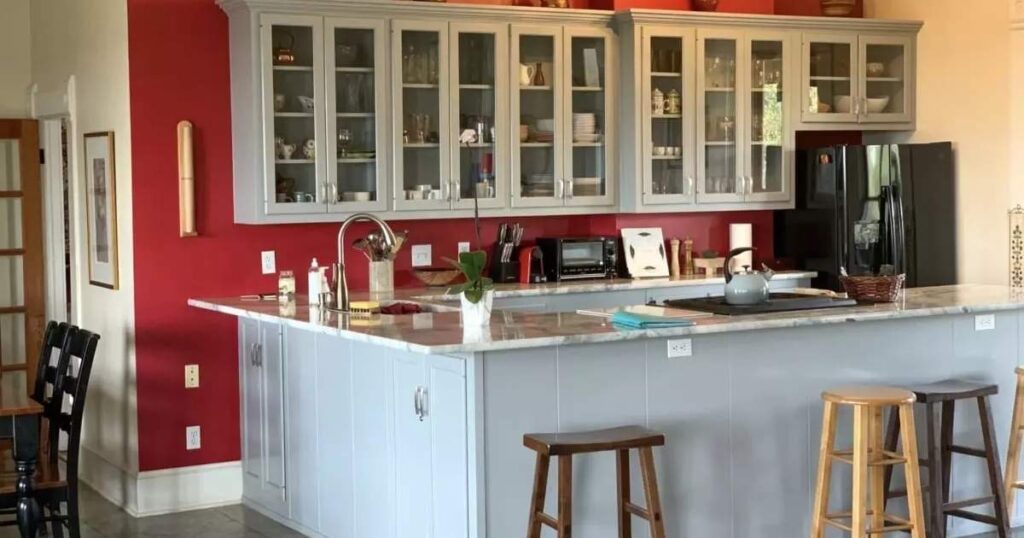
This pairing surprises people but it works. Red walls with gray cabinets feel unexpectedly warm, vibrant, and personal. Gray’s neutrality acts as a buffer, pulling back just enough of red’s intensity to keep the space from feeling overwhelming.
The key word here is muted. You’re not going full fire-engine red. Instead, look for:
- Brick red earthy, grounded, great for farmhouse kitchens
- Terracotta warm and organic, pairs well with natural wood elements
- Burgundy deep, rich, and suited to more formal or traditional kitchen styles
- Barn red rustic and characterful, especially paired with shaker-style gray cabinets
Red works best with cool-toned gray cabinets, where the contrast between warm walls and cool cabinetry creates natural visual tension the good kind. Keep countertops neutral (white quartz, butcher block) and let the wall color do the talking.
Warm vs. Cool Tones: Which Works Best in Gray Kitchen Cabinets?
This question is at the heart of every gray cabinet design decision. The answer depends entirely on your specific cabinet and the atmosphere you’re after.
Understanding undertones:
- Hold a white piece of paper next to your gray cabinet. If the cabinet looks slightly brownish or yellowish by comparison, it has warm undertones. If it looks slightly bluish or greenish, it has cool undertones.
Warm-toned gray cabinets pair best with:
- Cream, warm white, soft beige, terracotta, muted red, sage green
Cool-toned gray cabinets pair best with:
- Crisp white, navy blue, soft blue-gray, black, pale lavender
Lighting matters too. A north-facing kitchen with limited light benefits from warm wall tones to compensate. A south-facing kitchen with abundant natural light can handle cooler or deeper wall colors without the space feeling closed-in.
Quick decision guide:
| Your Goal | Best Wall Color Choice |
| Brighter, more spacious feel | White or soft cream |
| Bold, dramatic statement | Navy blue or black |
| Cozy and warm atmosphere | Cream, terracotta, or muted red |
| Calm, serene, spa-like | Soft blue-gray or sage green |
| Cohesive monochromatic look | Lighter shade of gray |
Real-Life Examples: Stunning Gray Kitchen Designs
Modern Minimalist
Picture flat-front, matte charcoal gray cabinets set against crisp white walls. The countertops are white quartz with barely-there veining. Hardware is minimal slim, matte black pulls. Pendant lights hang in clean geometric shapes. There’s no clutter, no pattern, no competing color. Everything points back to one idea: function with intention. White walls amplify natural light and let the deep gray cabinetry serve as the room’s defining feature.
Rustic Farmhouse
Shaker-style gray cabinets in a warm greige tone sit against barn red or deep terracotta walls. The countertops are butcher block. Open shelving holds mason jars and cast iron. A farmhouse sink in white porcelain anchors the space. Vintage-style hardware in oil-rubbed bronze adds patina and personality. The red wall and gray cabinets create warmth that makes the kitchen feel like the actual heart of the home lived-in, generous, and real.
Scandinavian Calm
Soft dove gray cabinets meet pale blue-gray walls in a kitchen built for stillness. The surfaces are clean and uncluttered. Natural wood elements a floating shelf, a cutting board, bar stools bring warmth to the cool palette. Lighting is soft and layered. A simple linen roman blind filters the window light. Nothing shouts. Everything breathes. This is a space designed for slow mornings and quiet evenings.
Organic Modern
Warm gray cabinets (the kind with just a hint of brown) pair with sage green walls and natural stone countertops. The backsplash is handmade ceramic tile in an earthy off-white. Plants are present on the windowsill, hanging from hooks. Brass hardware catches the light. The feeling is grounded and alive, like a kitchen that grew out of the earth rather than being installed into a house. Warm tones throughout create a cohesive, nature-forward palette.
Classic Elegance
Medium gray raised-panel cabinets, soft cream walls, and marble countertops with gray veining that ties the whole palette together. Crown molding. Under-cabinet lighting that glows warm. Polished nickel hardware. A kitchen island with subtle contrast perhaps a slightly darker gray adds visual structure. This is a kitchen that doesn’t follow trends because it predates them. The cream-and-gray combination has been doing refined work in classic interiors for generations, and it shows no signs of aging.
Conclusion
Choosing the right wall color for your gray kitchen cabinets isn’t about following rules it’s about understanding how color, light, and undertone interact in your specific space. White delivers brightness and versatility. Cream adds warmth and softness. Navy creates drama with sophistication. Black makes a bold, modern statement. And muted red? It surprises with warmth and personality.
The single most important step: identify whether your gray cabinets lean warm or cool, then build your wall color choice from there. When you get that match right, the entire kitchen clicks into place.
Test a few paint samples before committing look at them in morning light, afternoon light, and with your overhead lights on. Colors shift, and the right shade will reveal itself clearly when you see it in context.
Your gray cabinets are the foundation. The wall color is what makes them a kitchen worth living in.

