
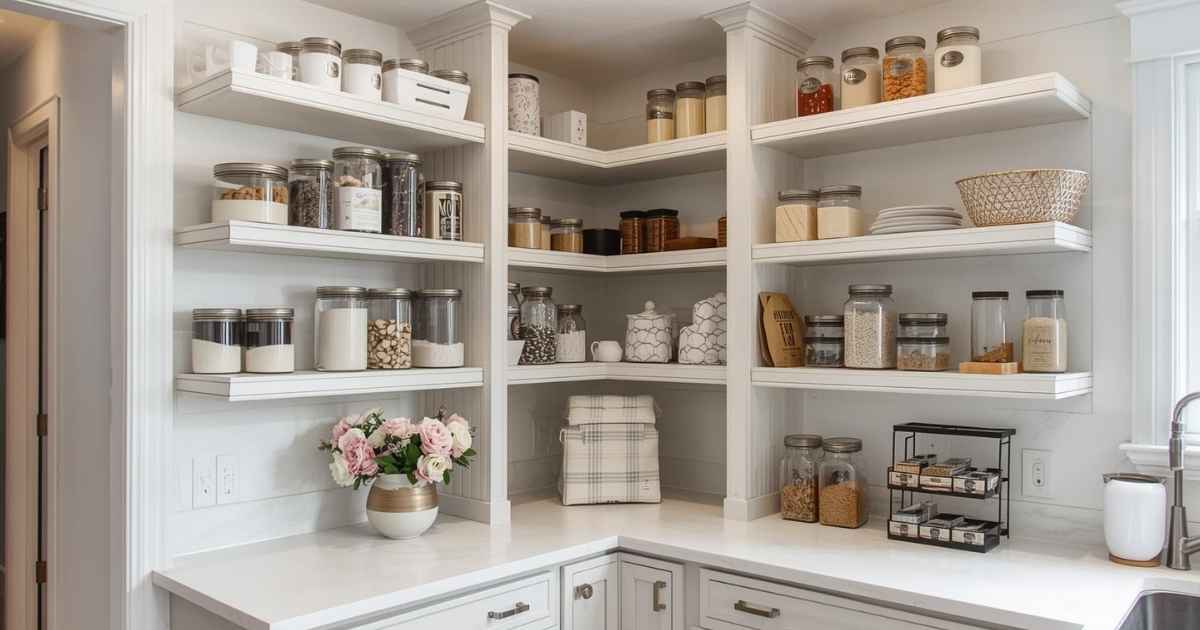

That awkward kitchen corner is wasting your space. Most homeowners ignore it completely. But it’s actually one of the best spots in your kitchen. This ultimate guide to corner kitchen pantry cabinets turns that dead angle into smart, useful storage. They keep your countertops clean and your essentials within reach.
The best part? They work in any kitchen. Small apartment layout or large open-concept space there’s a corner pantry design that fits. In this guide, you’ll learn about the best designs, the right dimensions, and how to avoid costly installation mistakes. Whether you’re renovating or starting fresh, this guide gives you everything you need to make your corner work harder than any other spot in your kitchen.
Benefits of Corner Kitchen Pantry Cabinets
Ultimate Guide to Corner Kitchen Pantry waste more space than homeowners realize. Corners are the biggest offenders they’re awkward to reach, easy to ignore, and almost always underused. A corner kitchen pantry cabinet fixes that problem directly. It fills the gap with purpose-built storage that keeps your kitchen organized and your countertops clear.
Unlike a traditional pantry tucked against a flat wall, a corner unit works with your kitchen’s geometry instead of fighting it. You gain significant storage capacity without adding square footage. In fact, a well-placed corner pantry can replace two or three standard base cabinets while holding far more. It also improves kitchen workflow everything from dry goods to small appliances stays consolidated in one accessible spot, so you’re not crossing the kitchen every five minutes.
Design Ideas for Corner Kitchen Pantry Cabinets
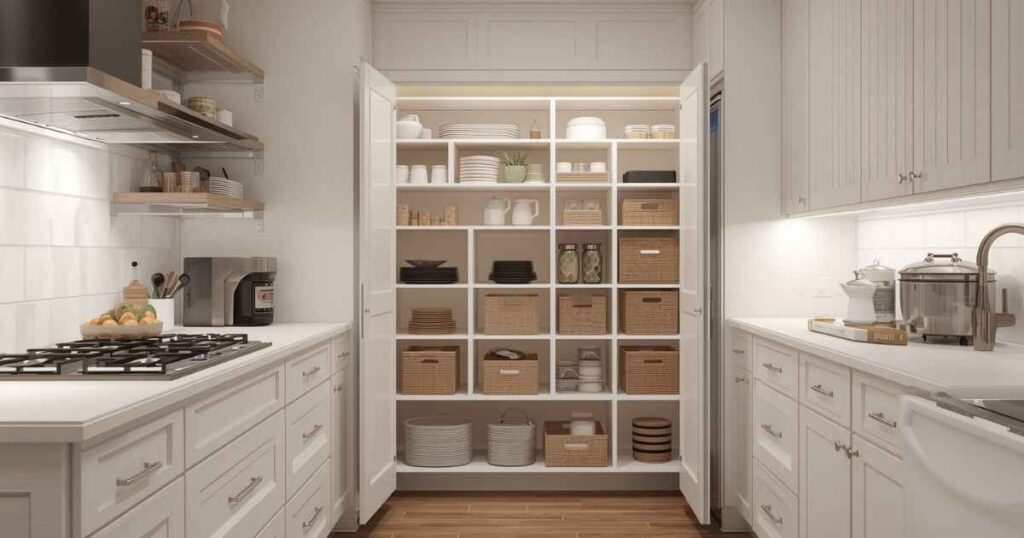
There’s no single “right” design for a corner pantry. The best choice depends on your kitchen size, layout, and how you cook. Modern corner kitchen cabinet ideas range from slim pull-out towers to full walk-in rooms, so you have plenty of options no matter your budget or floor plan.
The key is matching the cabinet style to your actual habits. Do you store lots of bulky appliances? Go tall and deep. Work with mostly dry goods and canned items? A compact unit with adjustable shelves might be all you need. Here’s a breakdown of the most popular designs.
Small Kitchen Corner Pantry Cabinet
A small kitchen corner pantry cabinet is a game-changer in tight spaces. Go vertical units that reach up to the ceiling give you maximum storage without eating into your floor plan. Pair it with pull-out shelves or a lazy Susan and nothing gets lost in the back.
Even a 24-inch wide cabinet can surprise you with how much it holds when it’s organized well.
Large Corner Pantry Cabinet
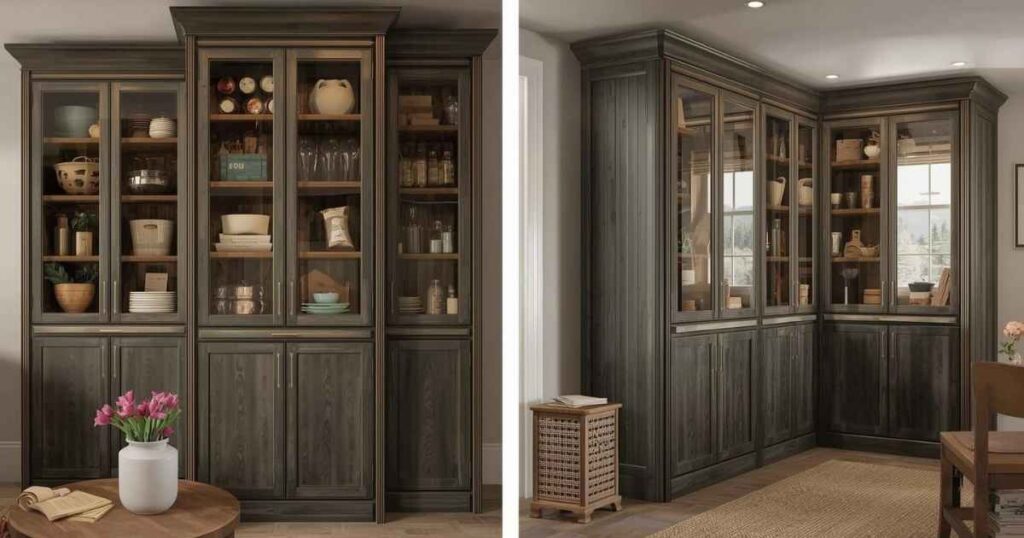
A large corner pantry cabinet suits open-concept kitchens where you have room to go wide and deep. Bi-fold or double doors work best here they open fully and give you a clear view of everything inside. Consider adding interior lighting and clear-front storage bins to keep things easy to find.
This style makes a strong visual statement too. Done right, it looks like a built-in feature rather than an afterthought.
Tall Corner Kitchen Pantry Cabinet
A tall corner kitchen pantry cabinet is one of the smartest space-saving kitchen cabinets you can install. Floor-to-ceiling height means more shelving, which means fewer cabinets needed elsewhere. That frees up wall space for windows, open shelves, or simply a cleaner look.
Use the lower sections for heavy items like mixers and crockpots and the upper shelves for lighter, less-used goods.
Walk-in Corner Pantry
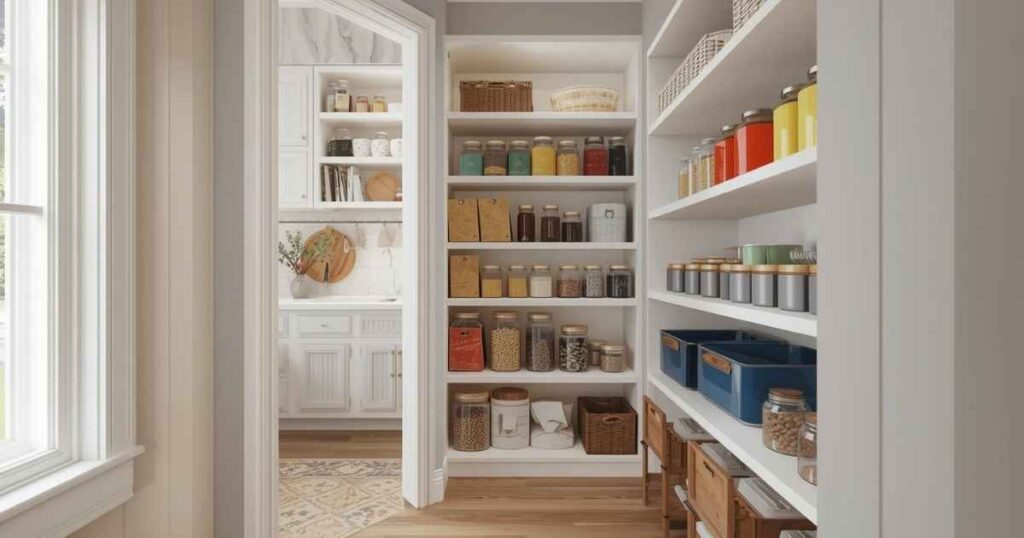
A walk-in corner pantry feels less like a cabinet and more like a dedicated storage room and that’s exactly the appeal. You can install open shelves on multiple walls, add a small countertop for prep work, and even hook a few items on the inside of the door.
Make sure the lighting is strong. A dim walk-in pantry becomes a black hole for forgotten ingredients fast.
L-Shaped Corner Pantry Cabinet
An L-shaped corner pantry cabinet uses two connecting walls to maximize the corner completely. It’s one of the most efficient layouts available because it wraps around the corner rather than just touching it. Use adjustable shelves so you can reconfigure the space as your storage needs change.
Soft-close doors are worth the upgrade here they protect your stored items from vibration and make the whole cabinet feel premium.
Blind Corner Pantry Cabinet
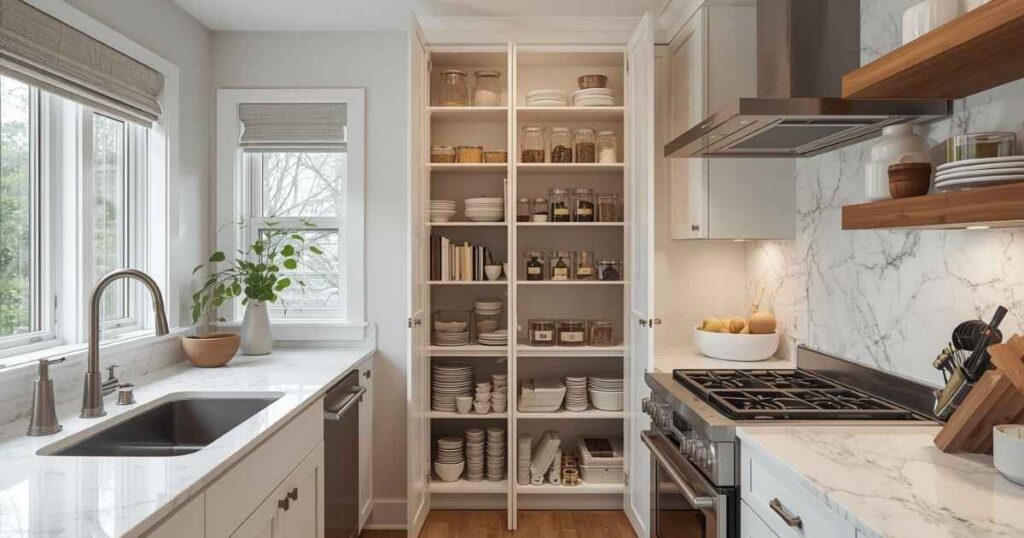
The blind corner cabinet has a reputation for being frustrating, and honestly, that reputation is earned but only when it’s set up wrong. The problem isn’t the cabinet itself. It’s the lack of a smart access solution. Once you add swing-out shelves, pull-out trays, or a carousel system, the blind corner becomes one of the most functional spots in your kitchen.
If you’re working with an older kitchen that already has a blind corner unit, don’t tear it out. Upgrade the interior hardware instead. Modern blind corner solutions are affordable and easy to retrofit. You’ll eliminate dead space and stop losing spatulas and spice jars to the back of the cabinet for good.
How to Choose the Right Dimensions of a Corner Pantry
Getting the size right matters more than most people think. Corner kitchen cabinet dimensions explained simply: measure your available corner space first, then work backward from there. Account for door swing, traffic flow, and any appliances or cabinets nearby that might limit your options.
Don’t just maximize size for the sake of it. A pantry that’s too deep becomes hard to organize, and one that’s too wide can block walkways. The goal is a size that fits your space and your habits not just the biggest box that technically fits.
Small Corner Pantry Dimensions
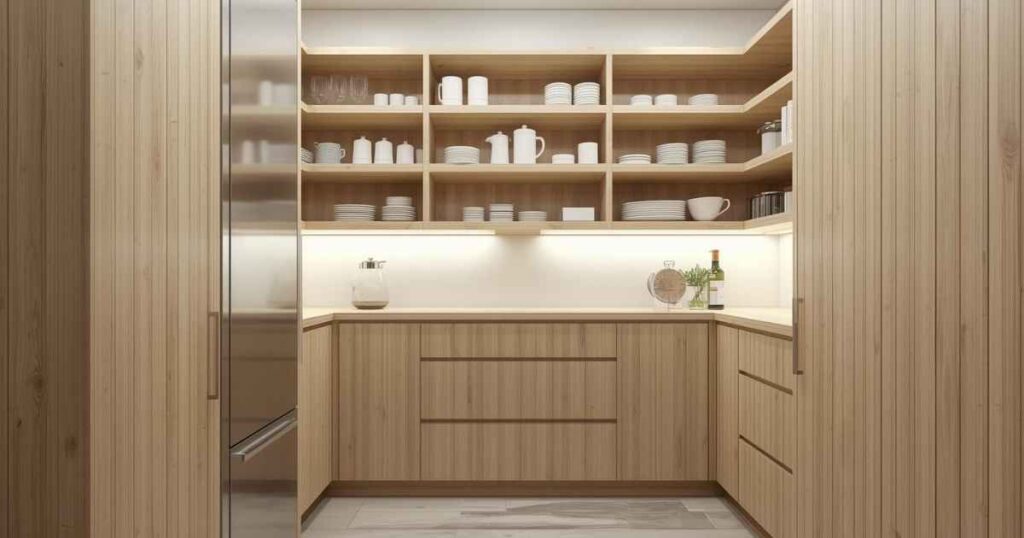
For a small corner pantry, aim for 24 to 30 inches wide and 12 to 16 inches deep. Keep shelves no deeper than 14 inches so items stay visible and reachable. A height of 84 inches or more gives you solid vertical storage without overwhelming a compact kitchen.
Large Corner Pantry Dimensions
A large corner pantry cabinet typically runs 36 to 48 inches wide and 16 to 24 inches deep. Space shelves about 12 to 15 inches apart vertically to accommodate everything from cereal boxes to storage bins. This size works best in kitchens with generous square footage and wide traffic lanes.
Walk-in Corner Pantry Dimensions
A walk-in corner pantry needs at least 48×48 inches to feel comfortable though bigger is always better if you have the room. Use 16-inch deep shelves on three walls and leave at least 36 inches of clear walking space in the center. A U-shaped shelf layout gives you the best combination of access and storage volume.
Precautions for Installing Corner Kitchen Pantry Cabinets
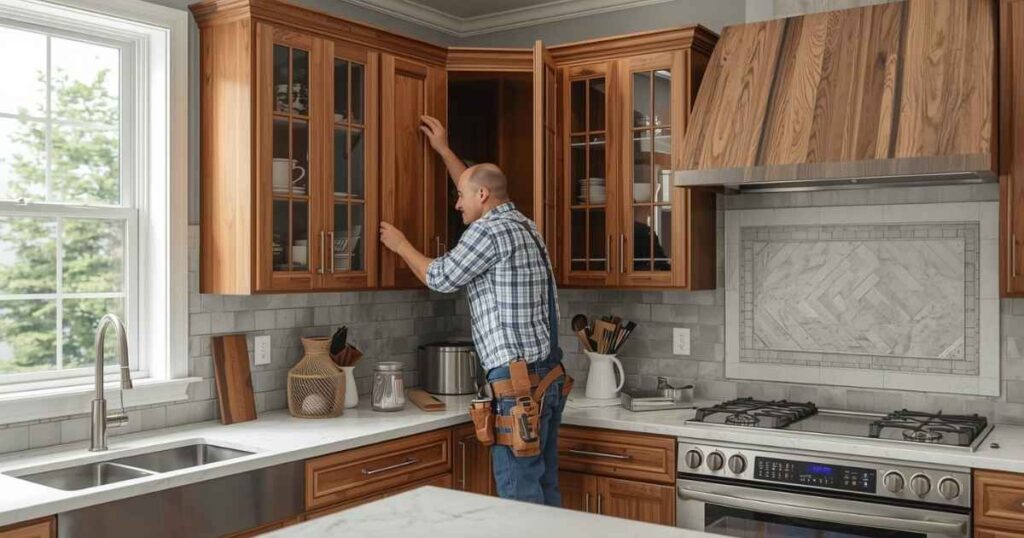
Before anything else, check that your floor is level and your walls are square. Even small imperfections cause alignment problems that affect how your cabinet sits, opens, and closes. Fix these issues before installation, not after.
Always do a dry fit first. Place the cabinet in position without securing it and test the door swing. You don’t want to discover it blocks a walkway or bumps into the refrigerator after you’ve already drilled into the wall. Also verify that the new unit’s height and depth match your existing cabinetry a mismatch throws off the entire kitchen flow.
Think about ventilation if you’re storing food or appliances inside. Poor airflow leads to moisture buildup, and moisture leads to musty odors or worse. Plan electrical outlets in advance too, especially if you want a coffee maker, toaster, or microwave living inside the pantry.
Finally, always anchor tall or heavy pantry units to wall studs. It takes five minutes and it’s non-negotiable especially in homes with young kids.
Conclusion
A corner kitchen pantry cabinet is one of the smartest upgrades you can make to any kitchen. It takes the space most people ignore and turns it into powerful, organized storage. From small pull-out units to full walk-in designs, there’s an option for every kitchen size and budget. The right cabinet keeps your countertops clear, your groceries organized, and your cooking life easier.
Getting it right comes down to three things choosing the correct design, measuring your dimensions carefully, and installing it properly. Don’t rush any of those steps. A well-planned corner pantry adds real value to your home and makes daily kitchen use genuinely enjoyable. Start with your corner, pick your style, and build a kitchen that finally works the way you need it to.
FAQs
What is a corner pantry cabinet and how does it differ from a regular pantry?
A corner pantry cabinet is designed specifically to fit into a kitchen corner, using angled or L-shaped layouts. A regular pantry sits flush against a flat wall and doesn’t utilize corner space at all.
How big should a corner pantry be?
It depends on your kitchen size. Small units start at 24×12 inches while walk-in designs need at least 48×48 inches. Always measure your corner and factor in door clearance before deciding.
What are the pros and cons of corner pantry cabinets?
The biggest pro is maximizing space that would otherwise go to waste. The main con is that some designs like blind corners can be tricky to access without the right interior hardware.
What are the best shelves for corner pantry storage?
Adjustable open shelves give you the most flexibility. Lazy Susans work well for deep corners and pull-out trays are ideal for blind corner cabinets where reach is limited.
How do I install a corner pantry cabinet correctly?
Level the floor, square the walls, and do a dry fit before securing anything. Anchor the unit to wall studs and verify door swing clearance before finalizing placement.

