

Open-concept living is great until you actually need a little privacy, a defined workspace, or a way to keep the living room from blending into the dining area. The good news? You don’t need a contractor, a permit, or a sledgehammer to fix that. A well-chosen room divider can split one large space into two functional zones while keeping the airy, open feeling intact.
Whether you’re working with a studio apartment, an open-plan living room, or a shared bedroom, the right divider adds structure, style, and storage all at once. Below are 21 creative room divider ideas ranging from shelving units and folding screens to plant walls and woven panels that help you separate spaces without ever touching drywall.
Open Bookshelf Creates Two Rooms Without Blocking Light
An open-backed bookshelf is one of the most popular room divider ideas because it does double duty: it separates space and gives you extra storage for books, plants, and decor.
Because the back is open, light and sightlines pass through, so the room still feels connected and bright. This makes it ideal for studio apartments where a bedroom area needs to be carved out of a living room without making either space feel cramped.
Why it works:
- Adds storage without using extra floor space
- Keeps natural light flowing between zones
- Easy to style with books, baskets, and decorative objects
- Can be secured to the wall or floor for stability
Related Post: What Wall Color Goes Best with Gray Kitchen Cabinets
Floor-to-Ceiling Shelves Form a Functional Partition
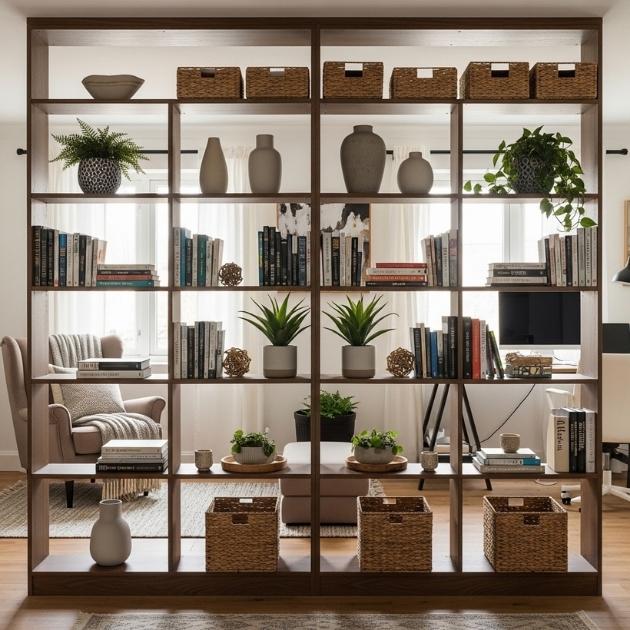
If you want a divider that feels intentional and architectural, floor-to-ceiling shelving is the way to go. Unlike a short bookcase, a full-height shelving unit visually reads as a wall while still letting you customize how open or closed it feels.
You can mix closed cabinets at the bottom with open shelving above, giving you hidden storage plus display space. This setup works particularly well between a primary bedroom and a living area, offering privacy without sacrificing the open layout.
Honeycomb Shelving Turns Storage Into Architecture
Honeycomb or hexagonal shelving units bring a sculptural, modern look to any open floor plan. Instead of standard rectangular cubbies, these units use interlocking hexagon shapes that create visual interest from every angle.
Because the hexagonal openings vary in size, you get a built-in gallery wall effect perfect for displaying plants, art, and small collectibles while still separating two areas of a room.
Open Cube Shelving Separates Dining and Living Areas
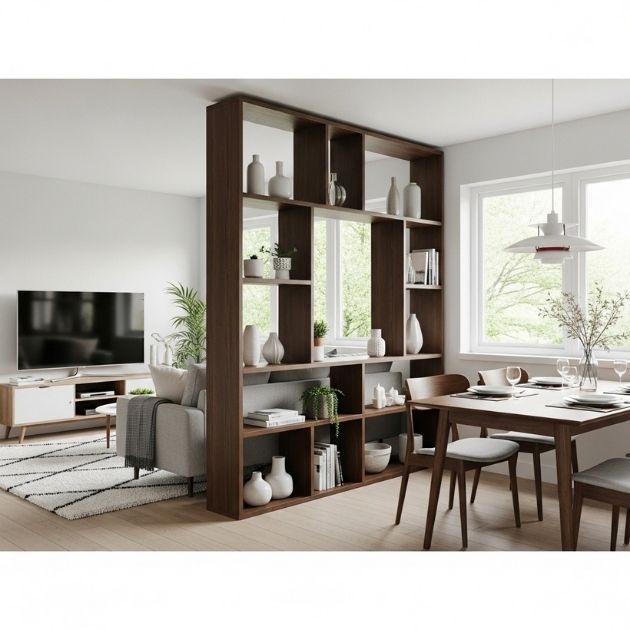
Cube shelving units are a favorite for separating a dining area from a living room because they’re modular, affordable, and endlessly customizable. Each cube can hold books, baskets, plants, or decorative boxes, giving you flexible storage on both sides.
Because the cubes are open on both faces, you maintain a visual connection between spaces while still signaling “this is the dining zone” and “this is the living zone.”
Geometric Shelves Create a Decorative Screen
Asymmetrical, geometric shelving units function less like traditional bookcases and more like wall art that happens to divide a room. Staggered shapes, angled lines, and mixed-size compartments create a dynamic focal point.
These shelves work especially well in modern or eclectic homes where the divider itself should feel like a design statement rather than just a functional piece.
Double-Sided Bookcase Defines Large Open Rooms
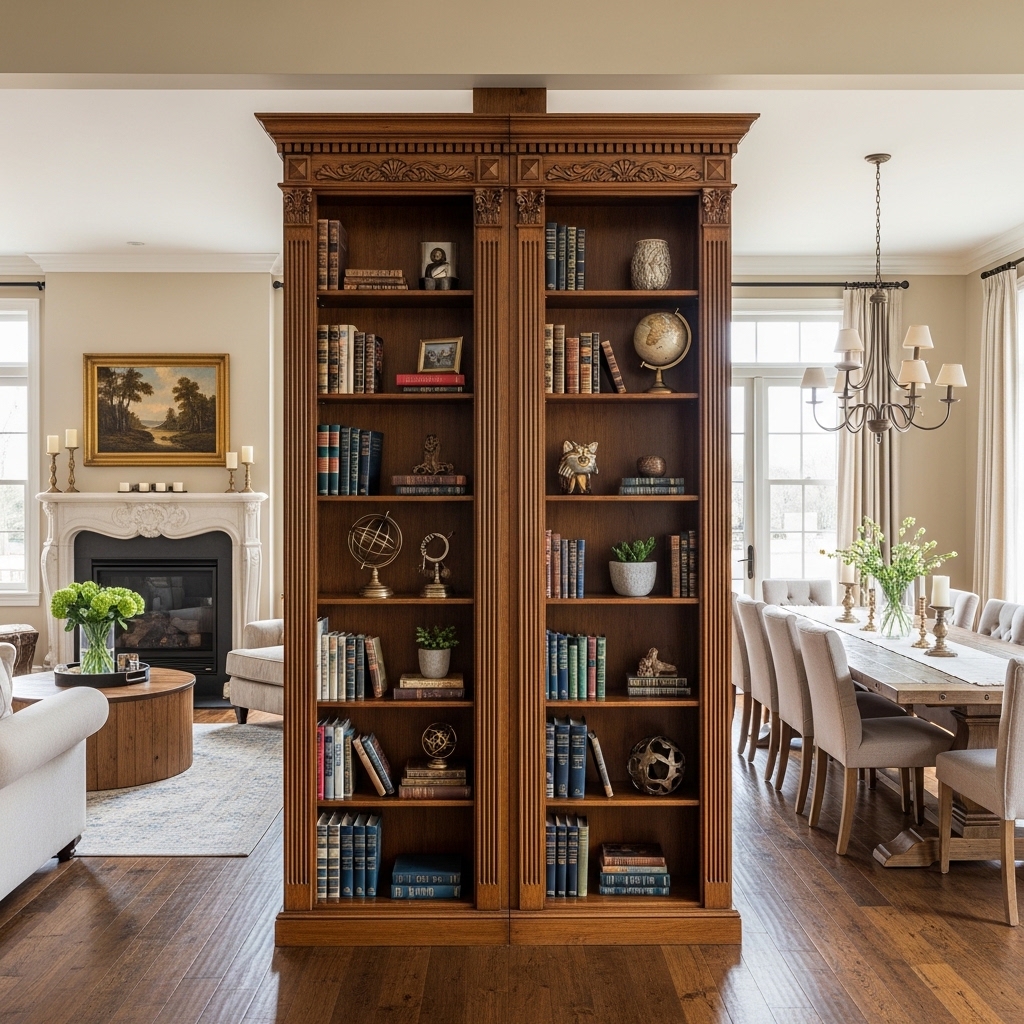
A double-sided bookcase is built to be viewed and used from both sides, making it one of the most practical room divider ideas for large, open-plan homes. One side might face the living room, while the other faces a home office or reading nook.
| Feature | Single-Sided Bookcase | Double-Sided Bookcase |
| Storage access | One side only | Both sides |
| Best for | Against a wall | Center-of-room dividers |
| Visual style | Flat back | Finished on all sides |
| Privacy level | Low to medium | Medium |
| Light flow | Open if backless | Open if shelves are backless |
Because both sides are finished, a double-sided bookcase can stand in the middle of a room without looking unfinished from either angle.
Sheer Curtains Create Flexible Room Separation
When you want separation that can disappear in seconds, sheer curtains are hard to beat. Hung from a ceiling-mounted track or tension rod, sheer fabric softly diffuses light while creating a clear boundary between zones.
This is one of the best room divider ideas for renters since it requires no permanent changes just a curtain rod and some fabric. Sheer curtains work beautifully to:
- Separate a sleeping nook from a living area
- Create a soft “doorway” effect in open-plan homes
- Add texture and movement to a space
- Allow quick reconfiguration for entertaining
Vanity Wall Creates a Bedroom Workspace Division
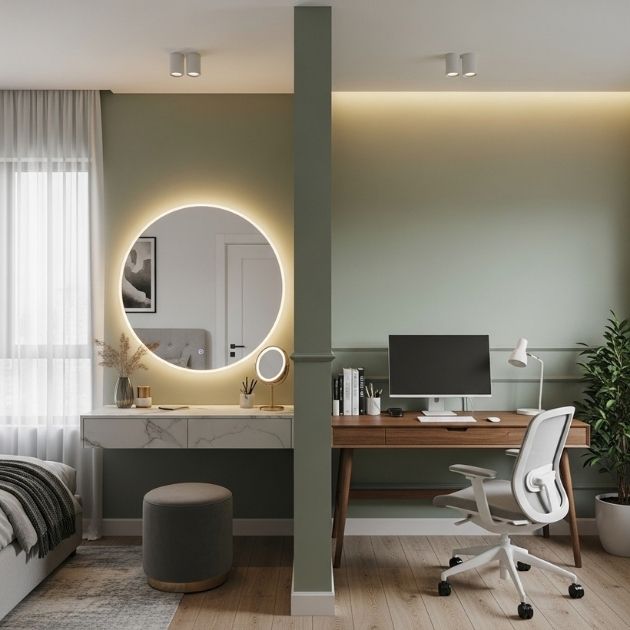
A vanity wall combines function and division in one piece of furniture. Placing a vanity or desk-style unit with a mirror against the back of a headboard or along a sightline creates a natural break between a sleeping area and a workspace or dressing area.
This idea is especially useful in primary bedrooms where you want a designated spot for getting ready without cluttering the main sleeping zone and it adds a built-in mirror and storage as a bonus.
Folding Screen Adds Privacy Without Construction
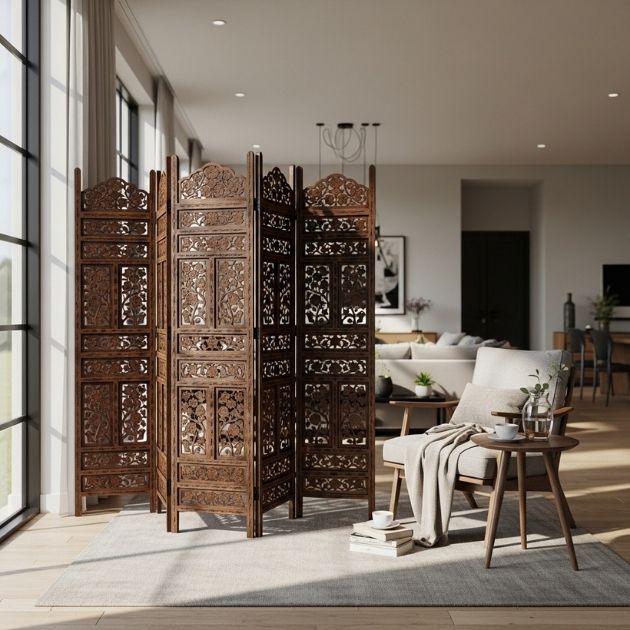
Folding screens are a classic room divider idea for good reason: they’re portable, affordable, and instantly transform a space. Available in wood, fabric, rattan, or metal, folding screens fold flat for storage and unfold wherever privacy is needed.
Best uses for folding screens:
- Hiding a home office setup when not in use
- Creating a temporary changing area
- Blocking a view of a bed from the entryway
- Adding decorative texture to a plain wall
Wallpapered Column Becomes a Natural Divider
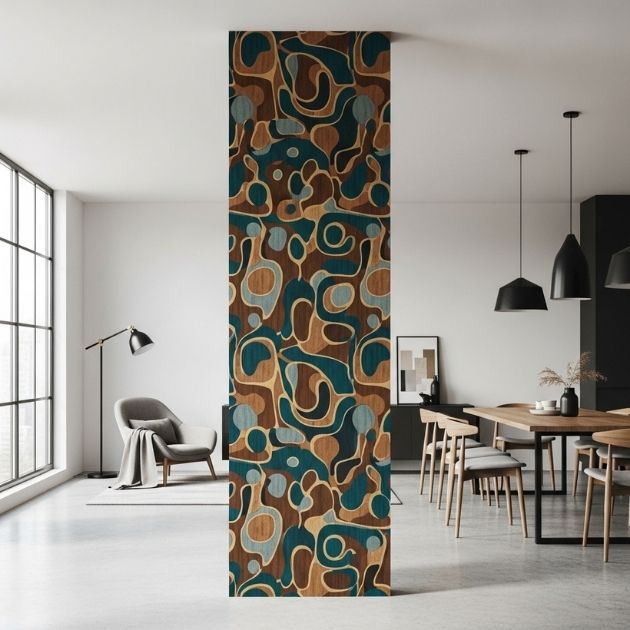
If your open floor plan has a structural column or post, don’t hide it highlight it. Wrapping a column in bold wallpaper, wood paneling, or wainscoting turns it into a natural anchor point that visually separates two areas of a room.
You can extend this idea by adding a half-wall or shelf around the column’s base, creating a soft transition between a living room and an entryway or dining space.
Open Grid Shelving Creates Defined Zones
Grid-style shelving think evenly spaced squares in a clean, minimalist frame offers a contemporary alternative to traditional bookcases. The repetitive pattern creates rhythm and structure, making it ideal for modern or Scandinavian-inspired interiors.
Open grid shelving works particularly well in home offices, where it can separate a desk area from a living space while displaying books, plants, and office supplies in an organized way.
Sculptural Shelving Divides the Room From Every Angle
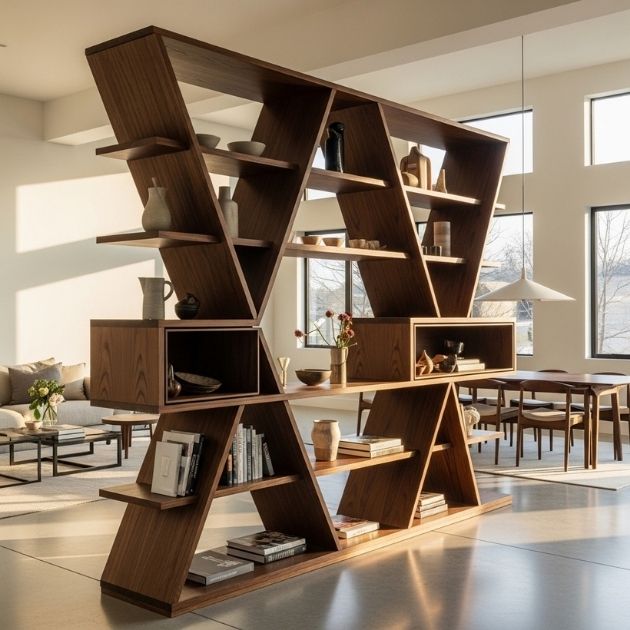
For homeowners who want a true statement piece, sculptural shelving units double as functional art. These freestanding pieces often feature curved lines, mixed materials, or asymmetrical forms that look intentional from every side of the room.
Because they’re designed to be viewed in the round, sculptural shelving units are ideal for centering in a large open space, such as a loft or great room, where a traditional flat-backed bookcase would look out of place.
Circular Wood Rings Create a Semi-Transparent Partition
Circular wood ring dividers often made from bent wood, rattan, or metal hoops connected vertically create a striking semi-transparent partition. Light and air pass through the open circles, while the repeated shapes draw the eye and define the space.
This style works especially well in boho, mid-century, or Japandi-inspired homes, and can be used to separate an entryway from a living room without closing off the view.
Backlit Shelving Defines Space and Creates a Feature Wall
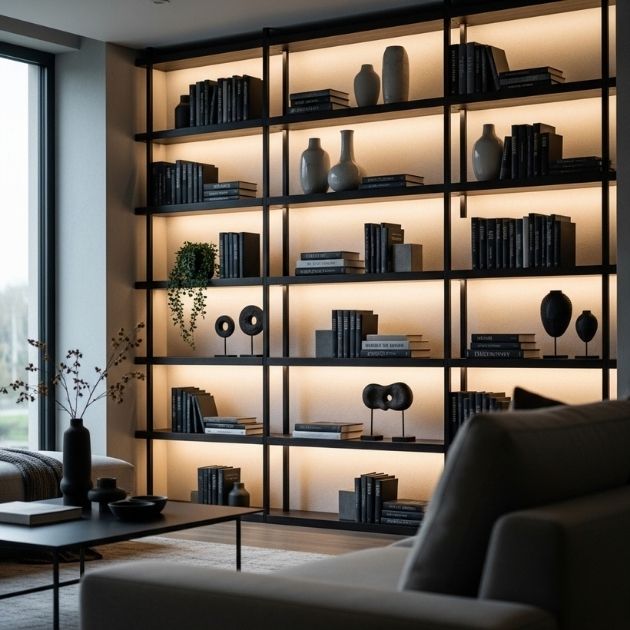
Adding LED strip lighting behind or within a shelving unit transforms a simple divider into a glowing feature wall. Backlit shelving:
- Adds ambient lighting to both sides of the room
- Highlights displayed objects like books, art, or plants
- Creates a soft glow that works well in evenings
- Makes the divider feel like an intentional design element, not an afterthought
This idea pairs well with open shelving or honeycomb units, since the light can shine through the gaps and illuminate both rooms at once.
Glass Book Display Creates Separation Without Visual Weight
A glass-fronted or glass-shelved display case offers separation while keeping the space feeling light and open. Unlike solid wood units, glass allows sightlines to pass through almost completely, making it a great choice for smaller rooms where a heavier divider would feel overwhelming.
Glass shelving also works well for displaying collections books, glassware, or decorative objects that benefit from being seen from both sides.
Decorative Panels Combine Privacy and Reflection
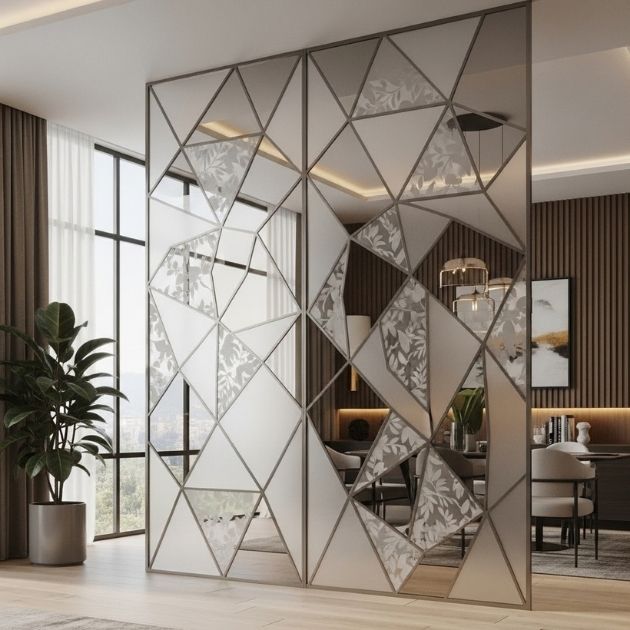
Decorative panels made from mirrored glass, fluted acrylic, or perforated metal add privacy while bouncing light around the room. Mirrored panels, in particular, can make a divided space feel larger than it actually is by reflecting light and views from the adjoining area.
These panels are often mounted on a slim frame and can be configured as a single fixed screen or a series of sliding panels for adjustable privacy.
Woven Screen Adds Texture Between Living Zones
Woven screens made from rattan, bamboo, or seagrass bring warmth and natural texture to a divided space. The loosely woven material allows airflow and filtered light through while still creating a visual break between zones.
This is one of the best room divider ideas for:
- Coastal, boho, or natural-style interiors
- Outdoor-adjacent spaces like sunrooms or patios
- Adding texture without adding visual bulk
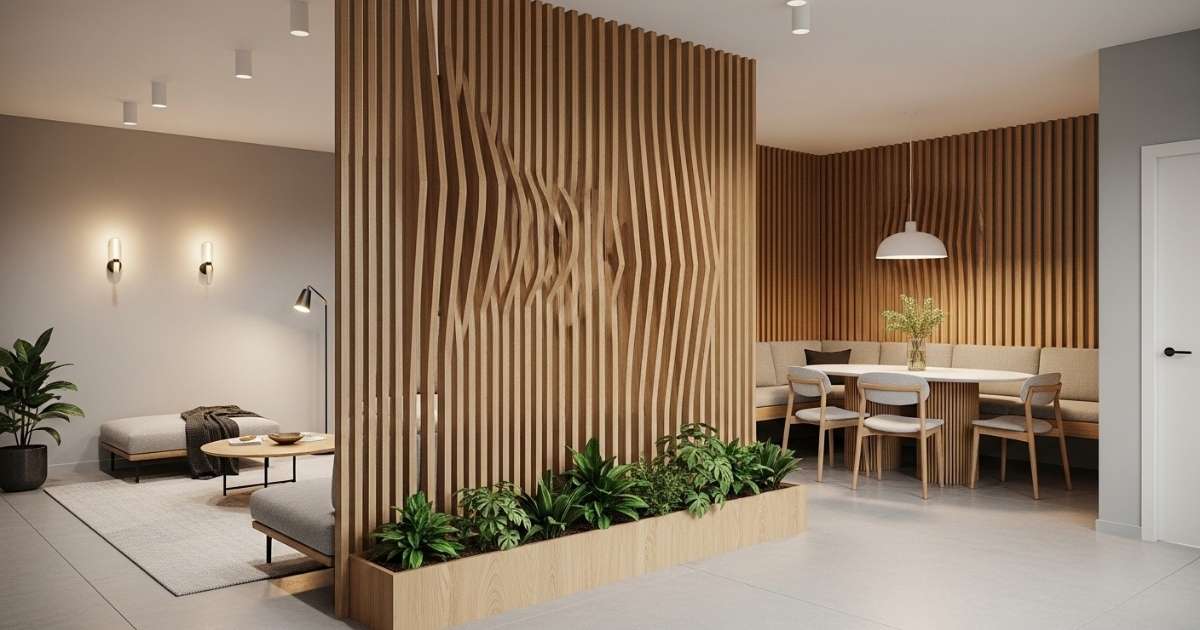
Vertical Wood Panels Divide Without Closing the Room
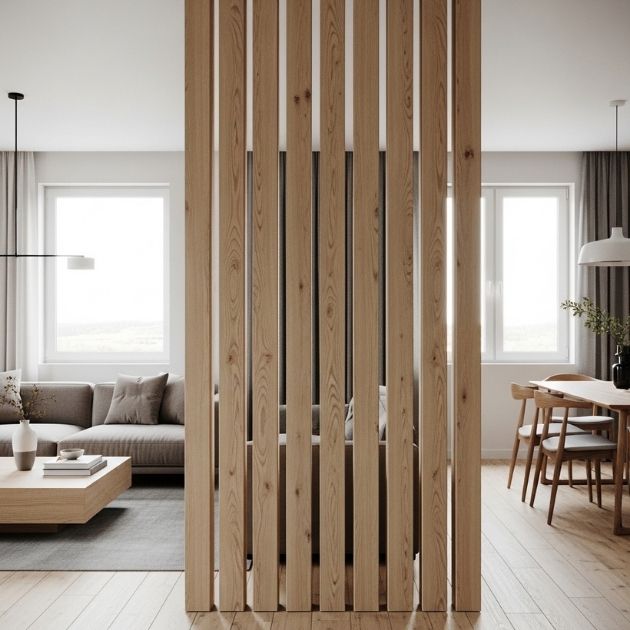
Spaced vertical wood slats sometimes called a slat wall divider create a rhythmic, semi-open partition that’s become a staple in modern interior design. The gaps between slats allow light and glimpses of the adjoining space to pass through, so the divider feels open rather than closed off.
Vertical wood panels can be:
- Mounted floor-to-ceiling for a permanent-feeling divide
- Built into a movable frame for flexibility
- Stained or painted to match existing trim and furniture
- Combined with planters or shelving for added function
Living Plant Wall Creates a Natural Room Divider
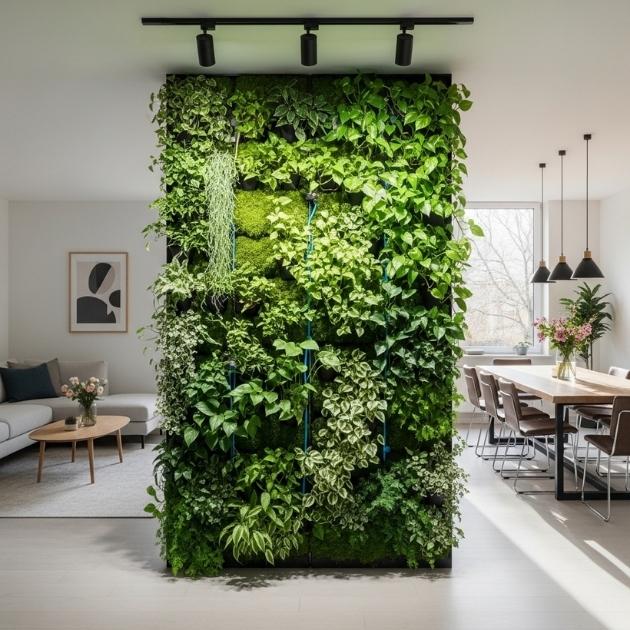
A living plant wall whether a built-in planter system or a row of tall potted plants brings a fresh, natural element to room division. Plants soften hard lines, improve air quality, and create a sense of separation that feels organic rather than architectural.
This idea works well for:
- Separating a home office from a living area
- Adding greenery to spaces lacking natural elements
- Creating a relaxing, spa-like transition between rooms
Modular Storage Wall Separates Space and Adds Function
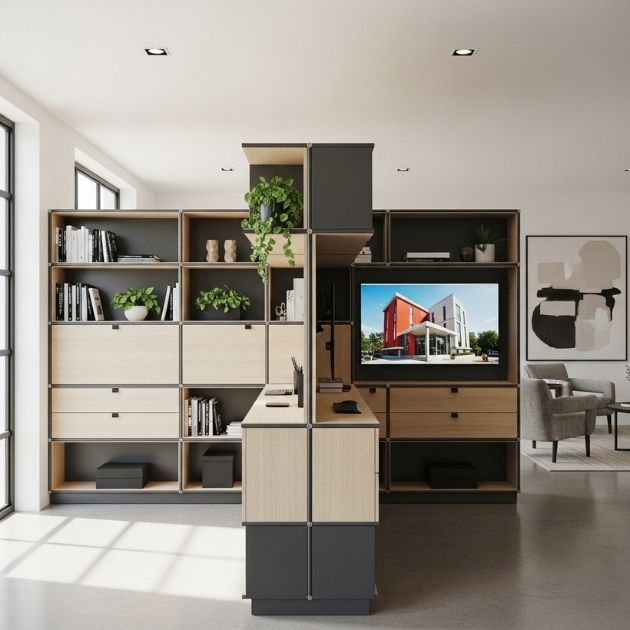
A modular storage wall combines cabinets, shelves, and sometimes a desk or media console into one configurable unit. Because the components can be rearranged, a modular wall can adapt as your needs change starting as a bookshelf divider and later becoming a home office setup.
| Modular Component | Function |
| Closed cabinets | Hidden storage |
| Open shelves | Display and books |
| Drawer units | Small item organization |
| Desk insert | Built-in workspace |
This flexibility makes modular storage walls a smart long-term investment for growing households or frequently changing layouts.
Hanging Geometric Screen Filters Views Through the Room
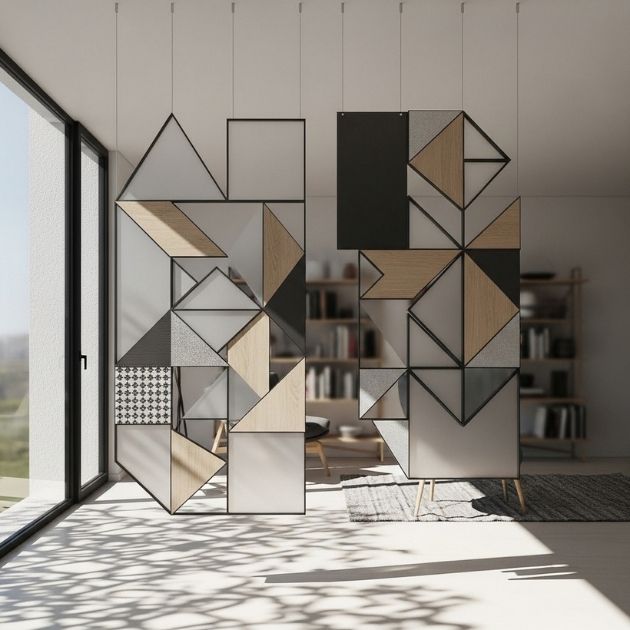
A hanging geometric screen suspended from the ceiling using cables or a track system creates separation without touching the floor at all. Made from materials like wood, metal, or acrylic in angular or honeycomb patterns, these screens filter views while keeping the floor plan completely open underneath.
This idea is especially useful in commercial or loft-style spaces, where a floor-based divider might interrupt traffic flow, but an overhead screen can still define separate zones.
Conclusion
Room divider ideas don’t have to mean big renovations or expensive contractors. A simple bookshelf, a folding screen, or even a curtain can change how a room feels and works. The best part is that you can try one idea, see how it fits your space, and switch it out later if your needs change.
If you’re short on space but big on style, start small. Pick one or two room divider ideas from this list, match them to your decor, and watch your home feel more organized and personal. Whether you want privacy, storage, or just a fresh look, there’s a divider here that fits your life without a single nail in the wall.
FAQ’s
What is the cheapest way to divide a room?
Sheer curtains, tension-rod fabric panels, and folding screens are the most budget-friendly room divider options since they require no construction.
Do bookshelf room dividers block light?
Open-backed bookshelves allow light to pass through, while closed-back units will block more light and create more privacy.
Can room dividers be used in rented apartments?
Yes freestanding bookcases, folding screens, curtains, and modular shelving units are all renter-friendly since they don’t require permanent installation.
How tall should a room divider be?
Floor-to-ceiling dividers create the most privacy, while waist- or shoulder-height dividers maintain an open feel while still defining separate zones.
What’s the best room divider for a small apartment?
Open shelving units, cube storage, and sheer curtains work best in small spaces because they add function without making the room feel closed in.

